
Filter by
784 results found
-
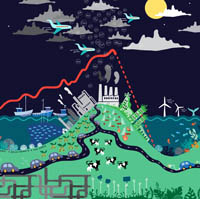
Art for net zero
We are proud to launch Cécile Girardin’s and Lisa Curtis’s net zero poster based on an inspiring talk by Christiana Figueres. Look out for the poster and join us for participatory art at our upcoming events in Oxford (Achieving Net Zero Conference) and New York (Nature’s Climate Hub). -

Welcome Nicole Chabaneix
We welcome our newest team member, Nicole Chabaneix. A biologist with six years of experience working on climate change and sustainable development research, policy and project management, Nicole has had key roles at WWF and the Ministry of Environment in her home country of Peru. -
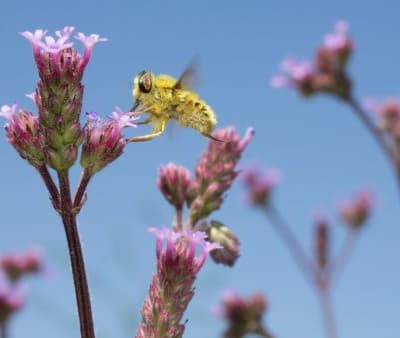
UN resolution passed calling for urgent action on peatlands
This March, a UN Resolution was passed that urges member states to conserve, sustainably manage, and restore their peatlands. This is a welcome development because peatlands are found in 180 countries, cover approximately 3% of the Earth’s land area, and provide habitats for diverse flora and fauna. Moreover, peatlands store vast amounts of soil carbon […] -
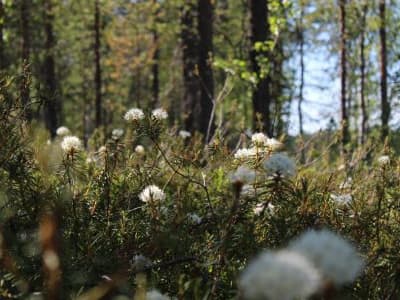
Nature-based Solutions highlighted in the IPBES Report
The much anticipated global assessment report on biodiversity and ecosystem services of the Intergovernmental Science-Policy Platform on Biodiversity and Ecosystem Services (IPBES) was launched on May 6th. The report paints a bleak picture. While our dependence on natural resources has grown dramatically, the capacity of nature to provide these resources is being severely diminished due […] -

United Nations Secretary General’s Climate Summit – NbS coalition
NbS are one of nine core themes for the upcoming UNSG Climate Summit. The NbS Coalition is being led by China and New Zealand, includes Costa Rica, Fiji, Norway, Portugal and Tajikistan, and is being supported by UN Environment, the CBD and coordinated by David Nabarro. The NbS coalition is calling for more systemic understanding […] -

Seven lessons for planning nature-based solutions in cities
Frantzeskaki (2019) Environmental Science and Policy Recent research on urban NbS tends to highlight the benefits of NbS, but not investigate implications for policy planning and governance. To address this gap, this paper analyses 15 urban experiments across 11 European cities that have implemented NbS projects and identifies lessons on how NbS may be chosen, […] -
Addressing societal challenges through Nature-Based Solutions: How can landscape planning and governance research contribute?
Alberts et al. (2019) Landscape and Urban Planning This paper explores how river landscape planning and governance research enhance understanding of the ways NbS can alleviate societal challenges. It also presents a conceptual framework for how planning and governance can help assess NbS effectiveness. NbS sometimes take more space and time than tech alternatives, require […] -
Maintaining tropical beaches with seagrass and algae: a promising alternative to engineering solutions
James et al. (2019) Bioscience Erosion of tropical beaches, exacerbated by climate change and coastal development, is resulting in coastal flooding, loss of income from tourism, and loss of habitat for wildlife across the globe. In this study, the authors determined the long term effectiveness of natural vegetation in stabilizing the foreshore and attenuating wave […] -
Biodiversity loss is a development issue
From genes to micro-organisms to top predators and even whole ecosystems, we depend on biodiversity for everything from clean air and water to medicines and secure food supplies. Yet human activities are destroying biodiversity around 1000 times faster than natural ‘background’ rates. -
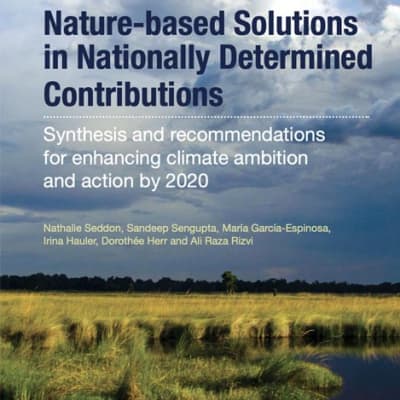
Nature-based Solutions in Nationally Determined Contributions
Synthesis and recommendations for enhancing climate ambition and action by 2020 -

Biodiversity loss is a development issue
“From genes to micro-organisms to top predators and even whole ecosystems, we depend on biodiversity for everything from clean air and water to medicines and secure food supplies. Yet human activities are destroying biodiversity around 1,000 times faster than natural ‘background’ rates. This global biodiversity crisis is hitting the poorest communities first and hardest because […] -
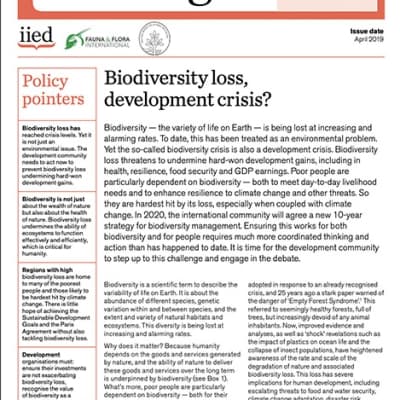
Biodiversity loss,development crisis?
Biodiversity loss has reached crisis levels. Yet it is not just an environmental issue. The development community needs to act now to prevent biodiversity loss undermining hard-won development gains. -
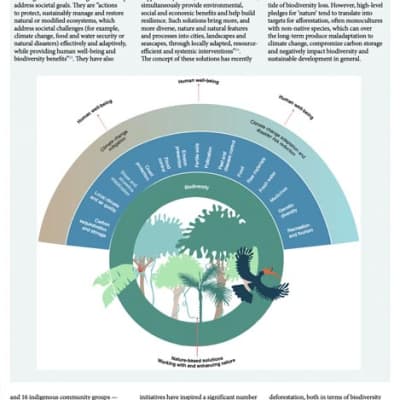
Grounding nature-based climate solutions in sound biodiversity science
The current narrow focus on aforestation in climate policy runs the risk of compromising long-term carbon storage, human adaptation and eforts to preserve biodiversity. An emphasis on diverse, intact natural ecosystems — as opposed to fast-growing tree plantations — will help nations to deliver Paris Agreement goals and much more. -

Grounding nature-based climate solutions in sound biodiversity science
We have a new paper out now in Nature Climate Change Summary The current narrow focus on afforestation in climate policy runs the risk of compromising long-term carbon storage, human adaptation and efforts to preserve biodiversity. An emphasis on diverse, intact natural ecosystems — as opposed to fast-growing tree plantations — will help nations to […] -
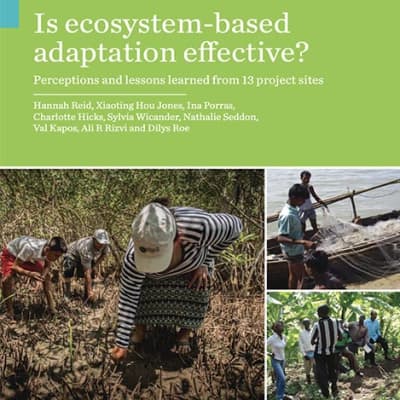
Is ecosystem-based adaptation effective? Perceptions and lessons learned from 13 project sites
Ecosystem-based adaptation (EbA) is an increasingly popular strategy for addressing the linked challenges of climate change and poverty in poor countries, where dependence on natural resources for lives and livelihoods is high. -
Wild Investments: Protected Areas as Natural Capital
Asia Pacific’s protected areas (PAs) are growing both on land and in the sea, but more investment is needed if the region’s rich biodiversity is to be adequately protected, but more investment is needed. -
Nature-based Solutions in the NDCs: A synthesis and recommendations for enhancing ambition and action by 2020
An event slide show given by Prof. Nathalie Seddon -
Ecosystem-based adaptation: a win–win formula for sustainability in a warming world?
Many national and international environmental agreements acknowledge that the impoverishment of ecosystems is limiting the world’s capacity to adapt to climate change and that ecosystem-based adaptation (EbA) approaches should be harnessed as a priority. -
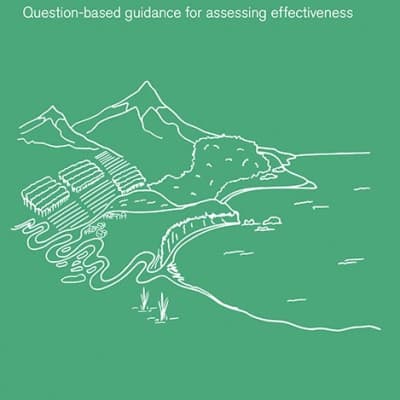
Ecosystem-based adaptation: question-based guidance for assessing effectiveness
This booklet sets out guidance for assessing the effectiveness of an ecosystem-based approach to climate change adaptation. It describes a process, based around asking a detailed set of questions, that can be used by project managers and researchers. -
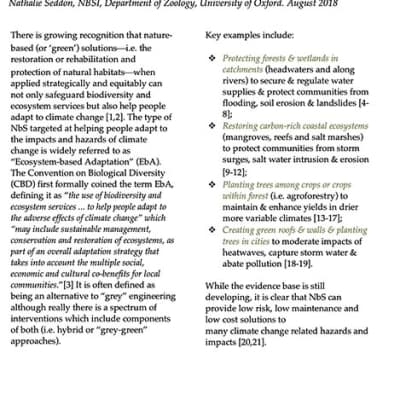
How effective are Nature-based Solutions to climate change adaptation
This breif discusses how nature-based solutions can help people adapt to the effects of change and disasters whilst slowing warming and protecting biodiversity, with many more positive consequences, fewer risks and lower costs than engineering-based approaches. -
Nature-based solutions: delivering national-level adaptation and global goals
“Many of the world’s vital natural ecosystems, and the communities reliant on them, are vulnerable to climate change. But there is increasing recognition that ecosystems — if sustainably restored and protected — can also form a strong line of defence against the direct impacts of climate change and support human adaptation over the long term. […] -
Nature-based solutions: delivering national-level adaptation and global goals
Policymakers should consider the co-benefits and additional protections against climate change impacts offered by low-cost nature-based solutions (NbS) in comparison to expensive engineered responses. -

A rallying cry for nature’s role in tackling climate change
China and New Zealand called on leaders in government and business to endorse nature-based solutions. The Nature-based Solutions for Climate Manifesto aims to attract political momentum, highlight the need for funding, and encourage the integration of nature in all aspects of planning and decision making for sustainable development. -

Jen M. Lucey
About Jennifer Lucey is the Deputy Director of the Nature-based Solutions Initiative and a Senior Researcher specializing in biodiversity and sustainable agriculture at the Smith School for Enterprise and the Environment (Department of Geography) at the University of Oxford. Her impact-driven research aims to find and refine nature-based solutions for transforming agricultural landscapes to support […] -

Sustain-Cocoa: Sustainable sourcing policies for biodiversity protection, climate mitigation, and improved livelihoods in the cocoa sector
The conversion and degradation of tropical forests have multiple negative socio- environmental impacts. Conversely, their restoration, including enhancing tree cover on already cleared farmland, is a powerful nature-based solution to climate mitigation and adaptation, with potentially large biodiversity and rural livelihood co-benefits. A major driver of forest loss and degradation in the tropics is the […]
