
Filter by
784 results found
-

Land-based measures to mitigate climate change: Potential and feasibility by country
Roe et al., 2021 A recent study in Global Change Biology estimates the land-based mitigation potential (technical and cost-effective), related land footprints, mitigation density potential, and feasibility of 20 land and demand management activities for over 200 countries. The study developed and adapted 25 “bottom-up” sectoral databases and 6 integrated assessment models (IAMs), with new […] -

NbS Guidelines highlighted in House of Lords S&T committee letter to COP26 President
The House of Lords Science and Technological Committee, chaired by Lord Patel, has written to RH Alok Sharma in his capacity as President for COP26 to highlight the role that nature-based solutions could play in the negotiations, as part of their ongoing inquiry into nature-based solutions. The letter emphasised the importance of adhering to the […] -

Featuring in international news in COP15 and COP26 buildup
We have provided commentary to a range of news outlets as coverage builds on biodiversity and nature as part 1 of COP15 has taken place 11-15th October 2021, and COP26 nears in November. The world’s biodiversity is on the brink. Can a UN summit make a difference?. Commentary in the Independent on what is at […] -
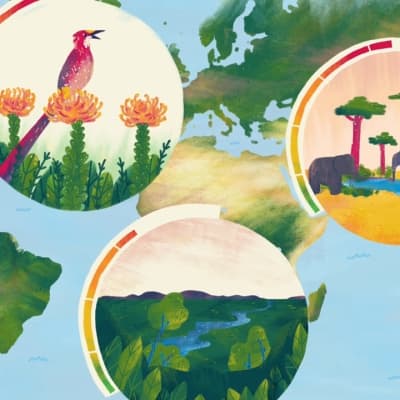
Sir David Attenborough animation marks Royal Society biodiversity launch
In a new animated short film from the Royal Society, Sir David Attenborough explores why we need biodiversity and what we must do now to protect it. The film premiered on Monday 11 October 2021 to coincide with a new report co-authored by NbSI Director Professor Nathalie Seddon: ‘Climate change and biodiversity: Interlinkages and policy […] -
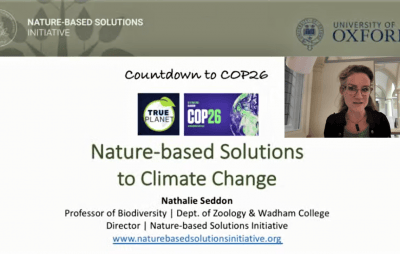
Outlining COP26 NbS goals in Oxford COP Conversations Event
During the first edition of the Oxford University ‘COP Conversations‘ Series, NbSI Director Nathalie Seddon discussed the role of Nature-based Solutions (NbS) in addressing climate change and the need for their inclusion in COP26 commitments (see also: “What are ‘Nature-based Solutions’ to climate change?”). Nathalie highlighted that the United National Climate Summit, COP26, taking place […] -
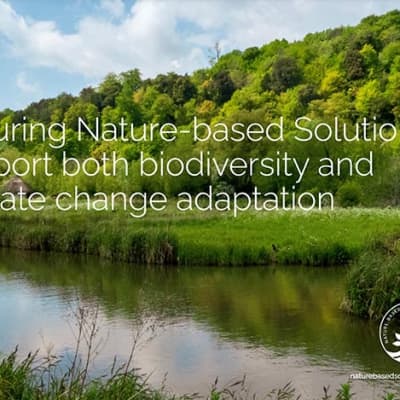
Ensuring Nature-based Solutions support both biodiversity and climate change adaptation
To better understand the biodiversity outcomes of NbS implemented for climate change adaptation. Although nature-based solutions (NbS) should by definition support biodiversity, not all projects framed as NbS have been shown to achieve this in practice. -
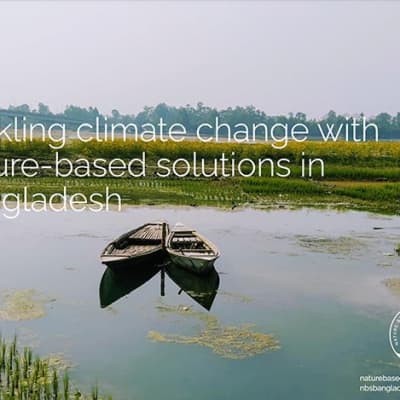
Tackling climate change with nature-based solutions in Bangladesh
Nature-based solutions are a vital tool for climate change adaptation. Our review found robust evidence that they can provide resilient and effective protection from climate risks while also supporting sustainable development and enhancing biodiversity. -

Reducing people’s vulnerability to climate change in the rural Global South using Nature-based Solutions
To implement nature-based solutions such as ecosystem restoration. Our research shows that such actions can help reduce people's vulnerability to climate change impacts across a diversity of social and environmental contexts -
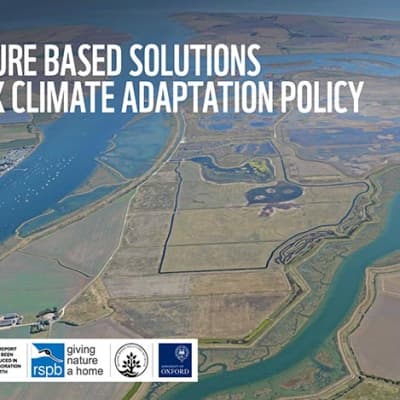
Nature-based solutions in UK climate adaptation policy
A report providing evidence that a wide range of NbS are being deployedin the UK, protecting and enhancing the services that nature provides. -
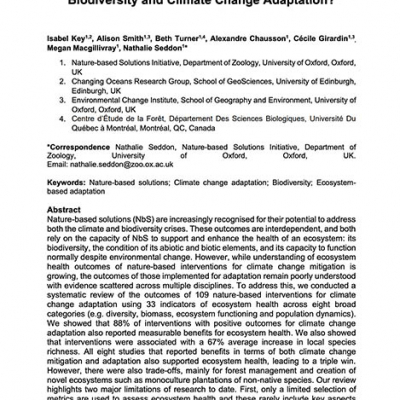
Can Nature-Based Solutions Deliver a Win-Win for Biodiversity and Climate Change Adaptation?
We conducted a systematic review of the outcomes of 109 nature-based interventions for climate change adaptation using 33 indicators of ecosystem health across eight broad categories (e.g. diversity, biomass, ecosystem functioning and population dynamics). -
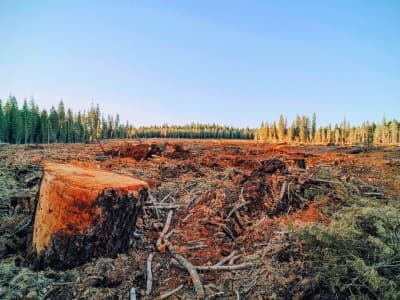
The UK’s Footprint on Global Biodiversity – UK Government report
A new Environmental Audit Committee (EAC) report – The UK’s Footprint on Global Biodiversity – states that unsustainable consumption is threatening biodiversity and must be tackled by the Government and businesses in order to protect species. The report follows the recently published ‘Biodiversity in the UK: bloom or bust?‘ which examined the state of biodiversity in […] -
NbSI-WWF-RSPB report on Nature-based Solutions in UK Climate Adaptation Policy
Our report, ‘Nature-based solutions in UK climate adaptation policy‘, commissioned by the RSPB and WWF, summarises evidence on the many ways in which Nature-based solutions (NbS) can address climate impacts in the UK, and explores the barriers and enabling factors that influence their wider uptake. NbS can play a critical role in helping the UK […] -
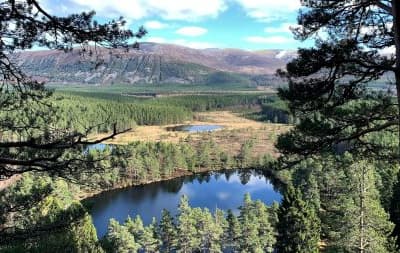
New Scottish land restoration project in Affric Highlands
A new land restoration project has been set up in the Affric Highlands, a region stretching between the east and west coast of the Scottish Highlands. The Affric Highlands initiative aims to increase connected habitats and species diversity over an area of 200,000 hectares (500,000 acres) over 30 years. The rewilding will boost habitat connectivity, […] -
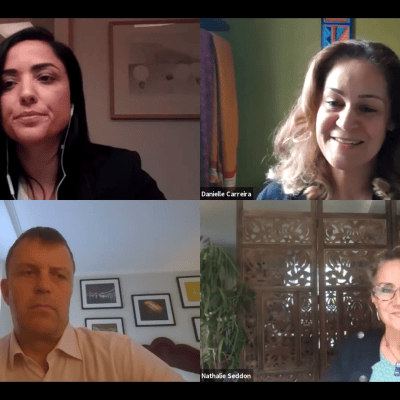
Panel discussion on Deforestation-Free Finance at Climate Week NYC
NbSI Director Professor Nathalie Seddon recently spoke at Climate Week NYC in a panel session on Deforestation-Free Finance by 2025, hosted by Conservation International, Nature4Climate, Tropical Forest Alliance, Global Canopy, and Climate Champions. Moderated by Danielle Carreira of WEF Tropical Forest Alliance, the panel also included Climate Champion Nigel Topping, and Emine Isciel, Storebrand Head […] -
Pledges made on Transformative Action for Nature and People
At Nature For Life Hub‘s ‘Transformative Action for Nature and People‘ event on 22nd September, coinciding with the 76th meeting of the UN General Assembly, over 20 Heads of State and leaders from indigenous communities, finance, philanthropy &and civil society joined in commitment to action for people and nature. As part of this, nine organisations […] -

Intertidal ecosystem restoration for climate resilience
A new National Trust programme of habitat creation and improvement is being undertaken throughout the River Tamar catchment, at the border between Devon and Cornwall in the UK. The nature-based solution employed through ecosystem restoration and creation of intertidal habitat will improve the region’s resilience to the changing climate, and provide a richer environment for […] -
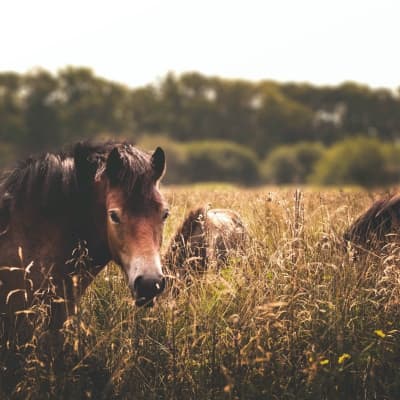
Effects of large herbivores on fire regimes and wildfire mitigation
Rouet-Leduc et al. 2021 A recent study in Journal of Applied Ecology has shown that the presence of large herbivores, such as domestic livestock, wild and semi-wild herbivores, within landscapes can prevent and mitigate wildfires, particularly in areas facing land abandonment. Rouet-Leduc et al. found that herbivores can provide a cost-effective nature-based solution, that in […] -
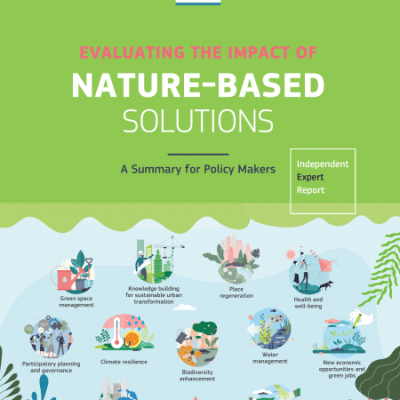
New European Commission report on evaluating the impact of Nature-based Solutions
A new report from the European Commission Directorate-General for Research and Innovation, Evaluating the Impact of Nature-Based Solutions: A Summary for Policy Makers, provides a high-level summary for practitioners and policy-makers for assessing the impact of nature-based solutions (NbS). Assessing the impacts of NbS is essential to understand their effectiveness in addressing current interrelated societal […] -

Climate Week NYC to accelerate climate action and assess progress ahead of COP26
Climate Week NYC is taking place September 20-26 2021 in New York and around the world. The yearly event returns with a focus on bringing together businesses, governments, and organizations to fulfill and increase commitments that accelerate climate action, and to assess progress ahead of COP26. NbSI Director Professor Nathalie Seddon will be speaking in […] -
IUCN Congress builds momentum on nature-based solutions for biodiversity conservation and climate action
The IUCN World Conservation Congress held 3-11 September 2021 tackled the world’s most pressing environmental challenges, with essential insights addressing the climate and biodiversity crises, as well as focusing on nature-based recovery. The event has three main components: the Members’ Assembly, where IUCN Members vote on priority actions; the Forum, a global marketplace of conservation […] -
WWF release Powering Nature Report on enabling Nature-based Solutions
A new report by WWF explores the barriers blocking nature’s potential and outlines a systemic enabling framework informed by wide-ranging evidence and ideas. The report calls for the unleashing of the power of nature to help solve key societal challenges at local to global scales, while maximising its positive nature-people-climate contribution. WWF is an independent […] -
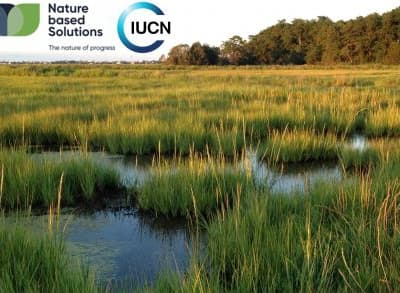
IUCN annouces collaborative certification scheme for Nature-based Solutions
In an announcement made at the 2021 World Conservation Congress, the IUCN has unveiled a plan to develop a collaborative certification system to ensure that Nature-based Solutions (NbS) actions and impacts are truly sustainable. The NbS certification system will be launched in 2022, and will enable business entities interested in obtaining certification of their NbS […] -
Coastal wetlands mitigate storm flooding and associated costs in estuaries
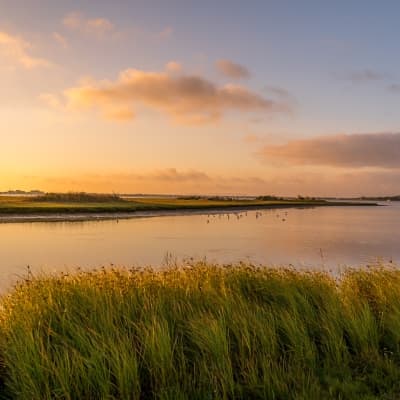
Fairchild et al. 2021 A recent study published in Environmental Research Letters has found that estuary wetlands such as saltmarshes reduce flooding more than previously thought. The authors created numerical hydrodynamic models of eight Welsh estuaries to simulate storms of varying intensity and coupling flood predictions to damage valuation. They found that in all cases […] -

The IUCN World Conservation Congress approaches
The IUCN World Conservation Congress, running 3-11 September 2021 both in-person in Marseille, France, and online, is where the world comes together to set priorities and drive conservation and sustainable development action. IUCN’s 1400+ government, civil society and indigenous peoples’ Member organisations vote on major issues, action which guides humanity’s relationship with our planet for […] -
COP26 Universities Network briefing: net-zero solutions and research priorities for the 2020s
A new briefing paper published by the COP26 Universities Network sets out the key net-zero solutions and policy actions that can be implemented now, as well as the priority areas for research to focus on during the 2020s in order to achieve the required emissions reductions for net zero. Achieving the UK’s net-zero target by […]