
Filter by
784 results found
-
Sink or swim: Forest Declaration Platform report on the role of IPLCs for NDCs
A recent Forest Declaration Platform briefing paper, ‘Sink or swim: How Indigenous and community lands can make or break nationally determined contributions‘, has been released by researchers from World Resources Institute and Climate Focus, exploring the role that IPLCs play in combating climate change. The briefing paper focuses on IPLCs in four countries – Brazil, […] -
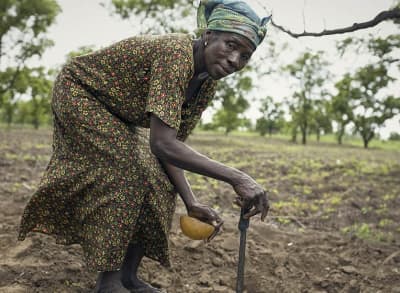
Farmer Managed Natural Regeneration in Ghana
The Talensi District is located in the environmentally fragile dryland area of northern Ghana, where almost 80% of the population works in agriculture, fisheries and forestry. Climate change, land clearing and unsustainable agricultural practices are leading to declining agricultural productivity and vulnerability of already marginal rural populations in this region. World Vision Ghana, together with […] -
NbSI Joins the Circular Bioeconomy Alliance
NbSI has joined the Circular Bioeconomy Alliance (CBA), becoming part of a global movement powered by nature and people. The CBA was established by His Royal Highness The Prince of Wales in 2020, and is facilitated by a Secretariat hosted by the European Forest Institute. It includes large and small intergovernmental organizations, companies, investors, research […] -

New UNCCD report on global land degradation and drought
The second edition of the Global Land Outlook report, GLO2: Land Restoration for Recovery and Resilience, has found that the world’s land area is now 40% degraded, and accelerating. The report states that if the current trend continues, a further 11% of the world’s land surface could be degraded by 2050. The Global Land Outlook […] -

Professor Nathalie Seddon appointed to CCC’s Adaptation Committee
NbSI Director Professor Nathalie Seddon has been appointed to the Climate Change Committee’s (CCC) Adaptation Committee, by the UK Government and Governments in Scotland, Wales and Northern Ireland. The Adaptation Committee (AC) consists of experts in climate change impacts, science, environmental economics, conservation, public health and business. They provide independent advice to the UK and […] -

Participatory watershed management in Yunnan province, China
Green Watershed is an environmental NGO based in China that works to maximise the potential for sustainable, integrated watershed development. Also known as the Yunnan Green Watershed Management Research and Promotion Centre, the NGO promotes participatory watershed management as a widespread practice as well as a focus of research and advocacy by civil society organizations. […] -
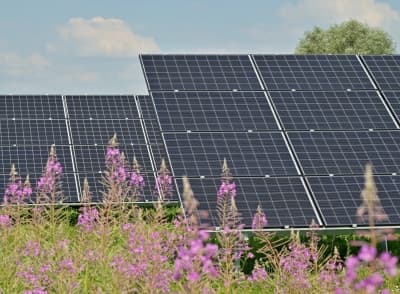
IPCC Climate Change Mitigation report released
The IPCC has finalized the third part of the Sixth Assessment Report, Climate Change 2022: Mitigation of Climate Change, the Working Group III contribution. It was finalised on 4 April during the 14th Session of Working Group III and 56th Session of the IPCC. The Working Group III reports on an updated global assessment of […] -
Actions to halt biodiversity loss generally benefit the climate
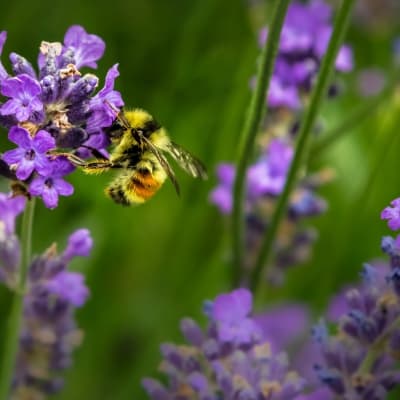
Shin et al. 2022 A review in Global Change Biology examines conservation actions which have the largest potential for mitigation of climate change, highlighting that conservation actions have a variety of benefits and few trade-offs with climate change mitigation. The study looked at the extent to which actions taken to halt or reverse biodiversity loss […] -

The biodiversity and ecosystem service contributions and trade-offs of forest restoration approaches
Hua et al. 2022 A recent study in Science has revealed the differences in the ecosystem services and biodiversity benefits of native forests compared to tree plantations. Diverse native forests were found to perform better in terms of supporting biodiversity, above-ground carbon storage, soil erosion prevention, and water provisioning, compared to simple tree plantations. Plantations […] -
Targeting climate adaptation to safeguard and advance the Sustainable Development Goals
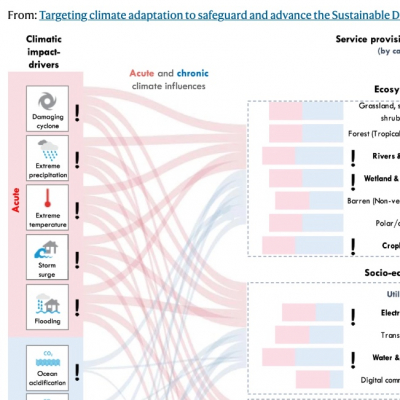
Here we propose a framework to conceptualise how ecosystems and socio-economic sectors mediate this relationship, which provides a more nuanced understanding of the impacts of climate change on all 169 SDG targets. Global application of the framework reveals that adaptation of wetlands, rivers, cropland, construction, water, electricity, and housing in the most vulnerable countries is required to safeguard achievement of 68% of SDG targets from near-term climate risk by 2030. -

River restoration for natural flood management in Eddleston Water, Scotland
The Eddleston Water project, funded by the Scottish Government and the Scottish Environment Protection Agency (SEPA), is investigating the effectiveness of natural flood management (NFM) techniques and habitat restoration measures at a catchment scale. The river was severely straightened at the start of 19th Century, and combined with agricultural intensification, the construction of a railway embankment, […] -
United Nations Environment Assembly agrees Nature-based Solutions definition
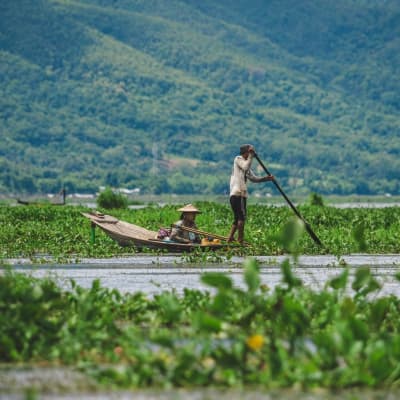
The Fifth Session of the United Nations Environment Assembly (UNEA-5) has made a resolution on adopting a multilaterally agreed definition of nature-based solutions (NbS); recognising the important role they play in the global response to climate change and its social, economic and environmental effects. The UNEA-5 resolution formally adopted the definition of NbS as ‘actions […] -

New IPCC Climate report on Impacts, Adaptation and Vulnerability released
The latest climate report of the IPCC ‘IPCC Working Group II report, Climate Change 2022: Impacts, Adaptation and Vulnerability’ has been released, highlighting the risk of climate change to human wellbeing & the health of the planet. The report reflects our increased knowledge of the interdependence of climate, ecosystems and biodiversity, and human societies, and […] -

NbS Conference 2022 announced
It is our pleasure to announce that on the 5-7th of July we will be hosting our Nature-based Solutions Conference 2022, held in the Natural History Museum, the Oxford Martin School, University of Oxford and online. We will be bringing together leading researchers from the social and natural sciences, engineering and economics, along with practitioners, […] -
Revised climate pledges show enhanced ambition for nature-based solutions
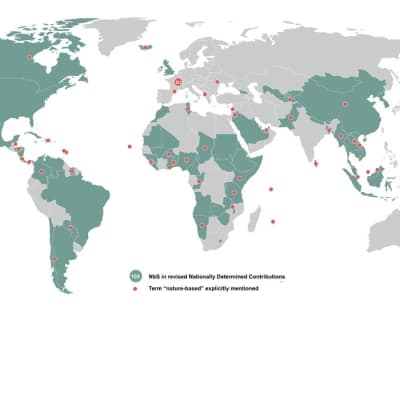
A total of 122 new NDCs were submitted last year, representing 148 signatories to the Paris Agreement. Our analysis of these new NDCs reveal enhanced ambition for nature-based solutions to climate change, with 84% of revised NDCs including the protection or restoration of ecosystems, or agroforestry, in their mitigation and/or adaptation plans, up from 78% […] -

New UNEP Frontiers Report on emerging environmental issues
The UN Environment Programme (UNEP) Frontiers’ report examines the current emerging issues of environmental concern. The 2022 edition, Noise, Blazes and Mismatches?, looks at three concerns: urban soundscapes, wildfires and phenological shifts. Chapter 1 examines city noise, drawing attention to noise pollution and its long-term physical and mental health impacts, along with measures that can […] -
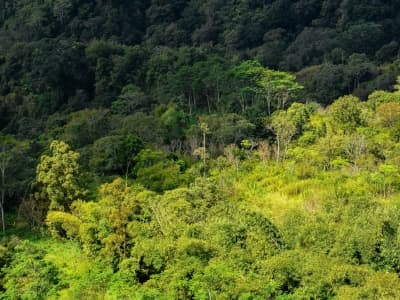
Co-benefits of forest carbon projects in Southeast Asia
Vadya Sarira et al 2022. A new study in Nature Sustainability by researchers at the National University of Singapore (NUS) reveals the social and environmental benefits of forest protection in South-east Asia. This region contains 196 million ha of tropical forests, many of which are under threat from agricultural expansion and other economic activities. Large-scale […] -

Trillion Trees Guide to Investing in Forest Restoration
A new tool from WWF, WCS and BirdLife International, the Trillion Trees Guide to Investing in Forest Restoration, helps those looking to support forest restoration by asking a series of questions to better understand the potential of any given restoration programme. The tool provides practical guidance for private, corporate, and institutional organisations to better understand […] -

Creating a Nature-Positive Future – UNDP report
A report from the United Nations Development Programme (UNDP), Creating a Nature-Positive Future, presents a path to enhance protected and conserved area coverage and quality to secure global nature, with multiple co-benefits for people. Protected areas (PAs) and other effective area-based conservation measures (OECMs) are a cornerstone of biodiversity conservation that provide co-benefits for achievement […] -

Indigenous council practices community-based conservation and natural resource management
An indigenous council representing the communities of an exceptionally biodiverse region of the central Tropical Andes has successfully gained a collective title to manage several hundred thousand hectares of land. The Consejo Indígena del Pueblo Tacana (CIPTA), or Indigenous Council of the Tacana People, secured a ‘Native Community Lands’ collective land title (TCO) from the […] -
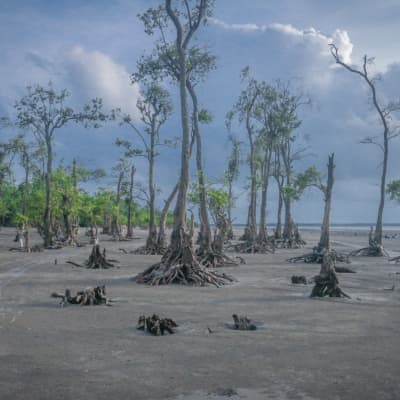
Coastal mangrove restoration using a community ecosystem-based adaptation approach
The Community Based Adaptation to Climate Change through Coastal Afforestation (CBACC-CF) program is the first Bangladesh National Adaptation Programme of Action (NAPA) project under the GEF-UNDP portfolio, implemented by the Government of Bangladesh in four coastal districts. Bangladesh is surrounded by vulnerable coastal areas where the intensity of weather events exacerbated by climate change is […] -

What influences the implementation of natural climate solutions? A systematic map and review of the evidence
Schulte et al 2022. A new study in Environmental Research Letters presents a systematic review of the contextual factors that influence the implementation of natural climate solutions (NCS). By examining a large global collection of research case studies from the peer-reviewed literature, the study synthesizes and maps the bottom-up evidence on NCS. This is is […] -

New £10m Agile Initiative announced, led by NbSI Director
A new Oxford University research programme, The Agile Initiative, has been established to provide rapid solutions to critical environmental issues. Based at the Oxford Martin School with £10 million of funding from the Natural Environment Research Council and led by NbSI Director Professor Nathalie Seddon, it will deliver high-impact interdisciplinary research and contribute urgently-needed answers […] -
Protect, manage and then restore lands for climate mitigation
Cook-Patton et al 2021. A recent study in Nature Climate Change, led by scientists from The Nature Conservancy, outlines a hierarchy for decision-making regarding protecting, managing, and restoring natural systems for climate mitigation. A series of approaches to maximising the use of Natural Climate Solutions (NCS) to tackle climate change were compared against four key […] -

Wageningen University & Research nature-based solutions challenge
Wageningen University & Research (WUR), is running a worldwide student Nature Based Solutions Challenge, where entrants come up with a nature-based solution proposal to face a panel of experts. The jury will select the teams that receive funding of 2500 euro as well as mentoring to support implementation of the winning project. The teams of […]