
Filter by
752 results found
-

Monitoring, reporting and verification of carbon dioxide removal: wider sustainability and the role of nature-based solutions
Most scenarios compatible with limiting global temperature in line with the Paris Agreement include a significant amount of carbon dioxide removal (CDR). However, concerns have been raised over the broader environmental impacts of scaling up some CDR technologies, and the integrity of emerging carbon markets. To start addressing these challenges, the greenhouse gas removal hub, […] -

Friends of COP letter to PM
Friends of COP, including NbSI Director Prof Nathalie Seddon, sent a letter to UK Prime Minister Rishi Sunak urging him to deliver on the UK Government's climate pledges, demanding an action agenda for climate and nature that is “good for people around the world – whether in terms of health benefits, climate security, or economic recovery – including for the future generations to whom we as decision-makers have a profound responsibility." -

‘Carbon code’ for Seagrass Restoration and UK Coastal Resilience
A new report by NbSI, Seascape Ecology Lab and Project Seagrass, calls for a UK-Specific Seagrass Carbon Code to harness the potential benefits of carbon offsetting and ecosystem restoration. -

Agroforestry: A Solution for Sustainable Cocoa as Climate Changes
A recent master's thesis by Jonna Halonen highlighted the vital role of shade trees in safeguarding cocoa agroforestry systems. By integrating shade trees into cocoa farms, farmers can increase resilience to climate change while promoting sustainable and eco-friendly cocoa production practices. -

Exploring Agroforestry in Coffee Production for Climate Resilience
By integrating trees and crops, we can mitigate and adapt to future climates, while simultaneously supporting the local community and economy, and reduce environmental degradation. This research demonstrates a pathway for sustainable coffee farming, emphasizing the importance of balancing ecology and the economy. -

Oxford host next generation of sustainability champions
Prize winners of the Trust for Sustainable Living's (TSL) International Student Essay Competition joined Nature-based Solutions Initiative for an inspirational day. -

Cocoa plantations are associated with deforestation in Côte d’Ivoire and Ghana
Cocoa cultivation revealed as a major driver of forest loss in West Africa. Official reports may have previously underestimated the planted area by up to 40%. -

NbSI visit latest Highlands Rewilding Project at Tayvallich
Bringing back species like the Eurasian beaver, Scottish wildcat, and red squirrels to their native habitats, the project aims to reinstate the ecological balance and create a sustainable environment. Native forests and wetlands promote carbon sequestration, mitigating the effects of greenhouse gases. Educational programs, wildlife monitoring, and eco-tourism initiatives also encourage community participation and contribute to the economic sustainability of the region. -

Developing A UK Seagrass Code
Seagrass protection and restoration would provide valuable carbon removal and storage, alongside substantial benefits for people and nature, but more needs to be done to encourage this through policy and nature financing. -

Biodiversity and ecosystem function responses to woodland creation
This project aims to understand biodiversity and ecosystem function responses to different woodland creation methods. -

Plight of the UK’s Nature taken to Parliament: The People’s Plan for Nature
The People's Assembly for Nature aims to chart a path toward a future where the wellbeing of both people and nature remains at the core of decision-making. With Britain facing the alarming status of being one of the most nature-depleted countries globally, immediate action is demanded. -

Urban Governance Atlas
The Urban Governance Atlas (UGA) is an interactive online database of over 250 good practice policy instruments that support nature-based solutions and ecosystem restoration. -

NbSI and Agile launch survey on UK-based conservation challenges
If you, or your organisation, work on projects involving Nature-based Solutions (NbS), we want to hear from you. Please take a few minutes to complete our survey to help shape future policy recommendations for how these projects can be supported in good practice. -

Can the concept of “Loss and Damage” help Avert the Biodiversity Crisis?
While the concept of "loss and damage" has gained traction in the context of climate change, there is a growing call to extend its application to address the adverse effects of biodiversity loss. -

Strengthening England’s Adaptation Programme with NbS to Bolster Climate Resilience
By embracing nature-based solutions at a national scale, England can secure sustainable and climate-resilient future. -

Current policies are insufficient to protect or restore Brazil’s cost-effective conservation priority zones
In Brazil, conservation priority zones, in spite of their key role in preserving natural vegetation and its environmental resources are frequently located outside the country's public network of protected areas (PAs). Here we present the first study on land-use impacts inside Brazil's unprotected (i.e. outside PAs) Cost-Effective conservation priority Zones (CEZs), for the period 2020–2050. -

Impact of land tenure on deforestation control and forest restoration in Brazilian Amazonia
This study examines how land tenure constrains Brazil's ability to meet its deforestation control and forest restoration goals in its Amazonia biome. Our findings are based on an updated assessment of land tenure and land use in the region -

Nature-based solutions are critical for putting Brazil on track towards net-zero emissions by 2050
Most of the world's nations (around 130) have committed to reaching net-zero carbon dioxide or greenhouse gas (GHG) emissions by 2050, yet robust policies rarely under- pin these ambitions. To investigate whether existing and expected national policies will allow Brazil to meet its net-zero GHG emissions pledge by 2050, we applied a de- tailed regional integrated assessment modelling approach. -

Cocoa plantations are associated with deforestation in Côte d’Ivoire and Ghana
re we combine cocoa plantation data with publicly available satellite imagery in a deep learning framework and create high-resolution maps of cocoa plantations for Côte d’Ivoire and Ghana, validated in situ -
Sustainable productivity: creating a framework for multifunctional land use
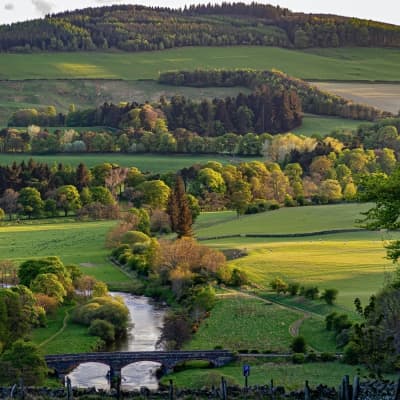
The natural capital of land affords us multiple benefits; from food production to climate change mitigation. Recent events such as extreme weather events, the COVID-19 pandemic and Ukraine war highlighted the need for resilience against global shocks. -

Protecting biodiversity and combating climate change: critical actions for a sustainable future
Climate change and biodiversity loss are deeply intertwined crises that are threatening the well-being of humans and nature, reducing Nature’s Contributions to People that sustain livelihoods, economies, and development prospects, as well as efforts to mitigate and adapt to climate change. Failing to take action will increase human vulnerability, including poverty, food insecurity, displacement, and […] -
Going beyond market-based mechanisms to finance nature-based solutions and foster sustainable futures
We draw on recent research on the effectiveness, governance, and practice of NbS to highlight key limitations and pitfalls of a narrow focus on natural capital markets to finance their scaling up. -

Going beyond market-based mechanisms to finance nature-based solutions and foster sustainable futures
Investments in activities that exploit and destroy biodiversity and its ecosystems currently outweigh investments in restoration and preservation. Subsidies for extractive industries total 1.8 trillion USD per year, while the finance and funding gap for biodiversity is estimated to be up to 891.3 billion USD. To address the biodiversity funding gap, calls have been made […] -
New agenda for ecological research in the UK
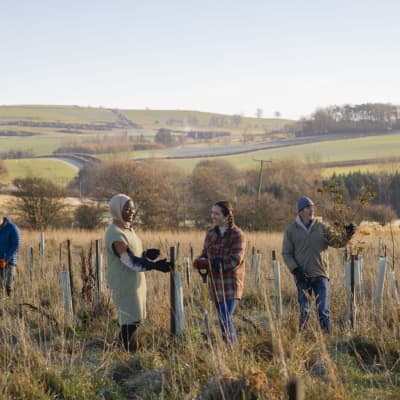
A new report published today by the British Ecological Society sets out a research agenda for ecology over the next 25 years. The Future of Ecological Research in the UK report offers a broad, ambitious vision for ecological research in a rapidly changing world, identifying five key themes to advance our understanding of the response of […] -

UK public calls for urgent action to protect the natural world following the country’s first citizens’ assembly for nature
The People’s Plan for Nature has launched today and it calls for an urgent shift in our relationship with the natural world. The plan was created by the first ever UK-wide citizens’ assembly for nature and includes recommendations for renewing and protecting our natural environment. The plan comes after decades of damage have pushed wildlife […]