
Filter by
784 results found
-
Addressing the challenges of managing and monitoring biodiversity in High Conservation Value areas and High Carbon Stock forests within oil palm landscapes
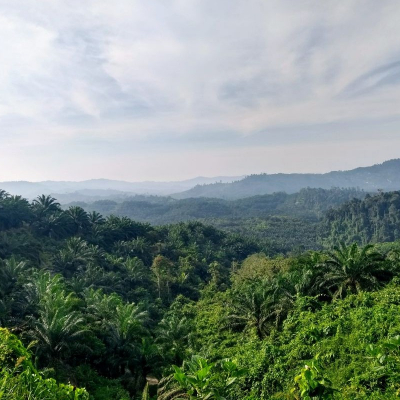
Protecting areas of natural habitat is an approach that is used to help conserve biodiversity in oil palm plantations. Their size and location affect the biodiversity of these sites and the management of sites is vital for ensuring their natural ecosystems remain in good condition and for maintaining forest canopy cover. -
Pathways to strengthen biodiversity protection in oil palm landscapes
A new study published today in Ecological Solutions and Evidence examines the challenges and solutions for protecting biodiversity within oil palm landscapes. Palm oil is a major global commodity, yet its production can come at significant environmental and social costs. Drawing on practitioner interviews, the study proposes recommendations to strengthen biodiversity protection and social safeguards in oil palm landscapes. -
The AGRIIH Showcase
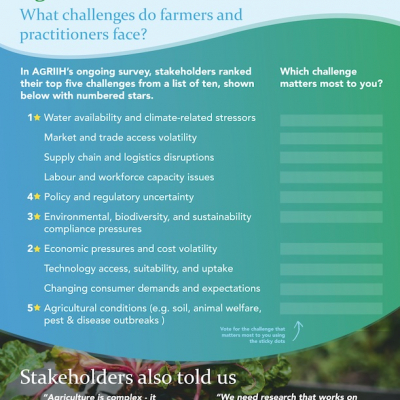
The AGRIIH Showcase brings together interdisciplinary research and dialogue at University of Oxford around agricultural resilience, exploring how research, practice, and collaboration can address challenges across nature, food, and farming systems. The exhibition highlights key themes including working with nature, technology and innovation, governance and values, and co-creating resilient futures. Explore the exhibition panels to learn more about the questions, approaches, and research areas featured at the Showcase. -
Ecosystem collapse recognised as a critical national security issue by UK government
The UK Government has just released a report that, if taken seriously, should transform how we think about climate, nature and security. 'Global biodiversity loss, ecosystem collapse and national security' is an official national security assessment that applies the same analytical tools used for high-impact security threats - structured uncertainty judgements, confidence levels, and “reasonable worst-case” planning - to the ecological crisis. Its conclusions align closely with the evidence presented at the recent National Emergency Briefing and with the World Economic Forum's latest Global Risks Report. -

Nature-based Solutions for Climate Adaptation in Small Island Developing States
A first-of-its-kind review provides valuable evidence that NbS can be effective climate adaptation strategies in SIDS, with broadly positive social, ecological, and economic outcomes. Just published by Zoe Brown in Frontiers in Environmental Science, the study shows the potential of NbS to provide triple-win outcomes and synergies across the ocean-climate-biodiversity nexus, and to address critical threats facing SIDS globally, including coastal risks, economic instability, and food insecurity. -

Scholars complete NbS to Global Challenges Foundation Course
Congratulations to the October 2025 cohort who have just completed our Nature-based Solutions to Global Challenges Foundation Course! -

Nature-based solutions in England’s new Environmental Improvement Plan
England’s revised Environmental Improvement Plan 2025 makes a clearer case for nature recovery as something that underpins, rather than competes with, economic security, climate resilience, public health and food production. But the plan still leaves open a central question: will the scale, pace and cross-government backing be strong enough to reverse ecological decline in time? -
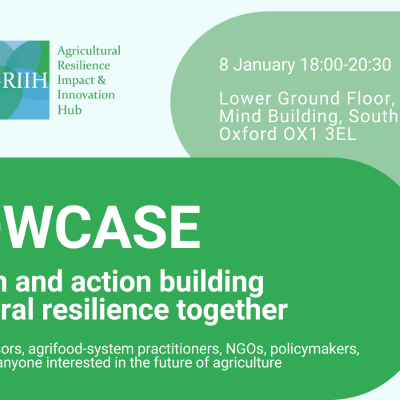
Oxford AGRIIH Showcase: Building Agricultural Resilience Together
Join us for the Oxford AGRIIH Showcase - a free fringe event to the Oxford Real Farming Conference and Oxford Farming Conference which will bring together researchers, farmers, and agricultural stakeholders to explore how research and action can work together to build agricultural resilience. -
The role of bioenergy with carbon capture and storage in the UK’s sustainable future
Report of workshop hosted by the Royal Society and the Nature-based Solutions Initiative focusing on the sustainability of biomass supply. -
The role of bioenergy with carbon capture and storage in the UK’s sustainable future
New report explores the role of bioenergy with carbon capture and storage (BECCS) in the UK's sustainable future including the 6th and 7th Carbon Budgets, focussing on feedstock sustainability. The report summarises discussions from a workshop hosted by the Royal Society and the Nature-based Solutions Initiative with a diverse mix of experts. -
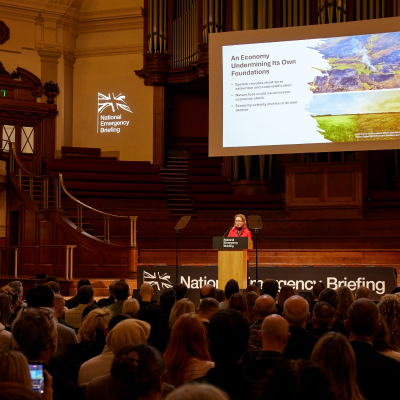
When Nature Fails, So Do We: Inside the UK’s National Emergency Briefing
On Thursday 27 November, over a thousand MPs, peers, senior civil servants, mayors, faith leaders, journalists, artists, activists, business and community leaders filled Central Hall Westminster for the UK’s first National Emergency Briefing on the Climate and Nature Crisis - delivered by ten of the UK's leading experts including NbSI Director Nathalie Seddon. -

Reflections from Belém at the end of Week 1: Climate, Nature and Justice in a Living Landscape
Week one of COP30 saw key developments on climate, nature and justice including the welcome announcement that Colombia's entire Amazonian biome will be off-limits from new oil and large-scale mining. Three threads shaped NbSI's first week: cooperation across the Rio Conventions, the evolving Global Goal on Adaptation; and the centrality of Indigenous rights and land relations. -
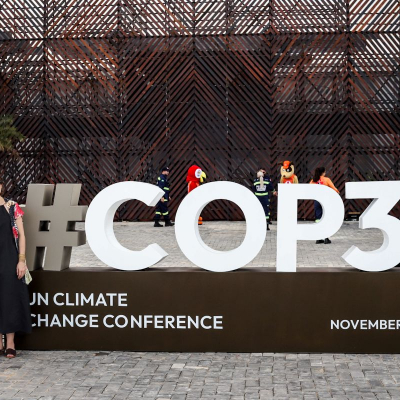
From Belém to the World: Climate, Nature, and the Global Ethical Stocktake at COP30
Ten years after the Paris Agreement, COP30 Belém - the first Climate COP in the Amazon - offers a pivotal opportunity to spotlight the critical role of tropical ecosystems and the Indigenous Peoples and Local Communities (IPLCs) who care for them. Our team are on the ground in Belém, where Brazil’s ‘Mutirão’ spirit and Global Ethical Stocktake are laying the foundations for a global shift towards justice, reciprocity and regeneration. -
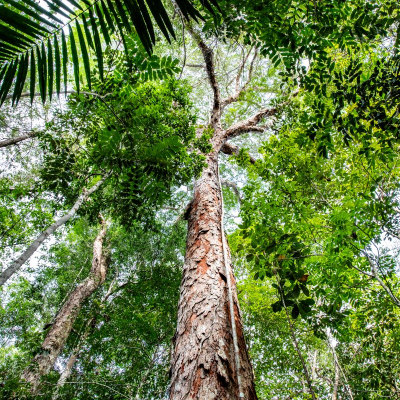
Tropical Forest Forever Facility launched at COP30 Belém
COP30 Belém saw the launch of the Tropical Forest Forever Facility - an ambitious new investment mechanism designed to channel long-term public and private funding to keep tropical forests standing. The TFFF could mark a paradigm shift for climate finance, strengthening agency for tropical forest nations and the Indigenous Peoples and local communities leading tropical forest protection. -
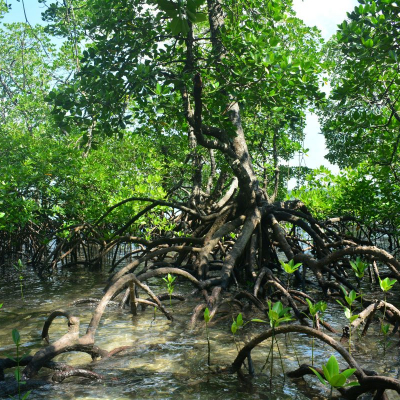
New Global Benchmark for NbS: IUCN Launches Updated Global Standard for Nature-based Solutions
The International Union for Conservation of Nature (IUCN) launched the Second Edition of the Global Standard for Nature-based Solutions at the 2025 World Conservation Congress in Abu Dhabi. By strengthening scientific rigour, social safeguards and practical usability, the updated Standard provides a stronger foundation for scaling credible, high-quality NbS worldwide. -
Promoting Nature-based Solutions and Sustainable Infrastructure in the ECE Region: Environmental and Health Co-benefits
-
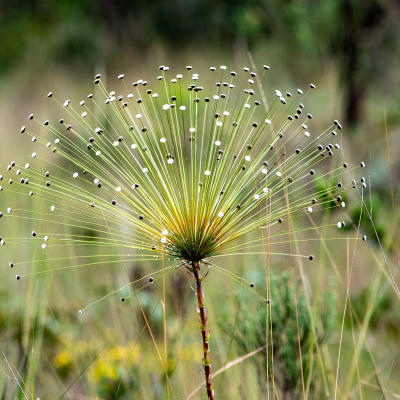
Climate change and weak policies endanger Brazil’s Cerrado endemic flora
Brazil’s Cerrado, one of the most biodiverse savannas on Earth, is already suffering record levels of land conversion and now faces intensifying climate pressures like extreme drought. A new study warns that, without stronger conservation policies, the combined forces of climate change and habitat loss could drastically reshape the distribution of the Cerrado’s threatened endemic flora by 2050. -
Planning and Infrastructure Bill: Key Concerns and Recommendations
The Planning and Infrastructure Bill, currently being debated in the House of Lords, has far-reaching implications for biodiversity, local democracy, and community wellbeing. We have prepared a briefing note to highlight priority amendments to make the Bill less damaging and more nature-positive. -
Assessing potential implications of the EU’s carbon dioxide removal strategy on Brazil’s land ecosystems and local communities
Here we recommend a set of integrated and participatory policy approaches that prioritise procedural justice, ensure transparent international cooperation, and mitigate the unintended impacts of global CDR strategies on vulnerable ecosystems and communities. -
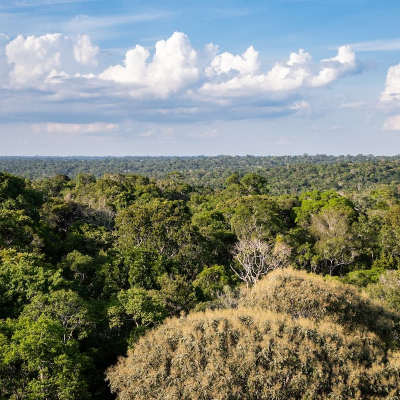
Potential Impacts of the EU’s carbon dioxide removal strategy for Brazil’s land ecosystems and local communities
Land-based carbon dioxide removal options like Bioenergy with Carbon Capture and Storage (BECCS) have strong emphasis in the EU’s roadmap to net zero, but at what cost? Taking Brazil as a case study, a new paper explores the potential environmental and social consequences of the EU’s CDR strategy beyond its boundaries. -

AGRIIH Highlights Collaborative Agricultural Resilience Work at BES and Groundswell
The Agricultural Resilience Impact and Innovation Hub (AGRIIH) is building a collaborative community working on agricultural resilience. The team recently presented early progress at the BES Nature, Farming and Food symposium and Groundswell Regenerative Agriculture Festival. -
Understanding the diverse values of shade trees on cocoa farms in Ekiti State, Nigeria
This study investigates the values that underpin cocoa farmers' decisions around shade tree retention in Ekiti State by analysing tree species composition, density, and basal area alongside farmer perspectives using content and thematic analysis, across fifteen farms in Ekiti State -
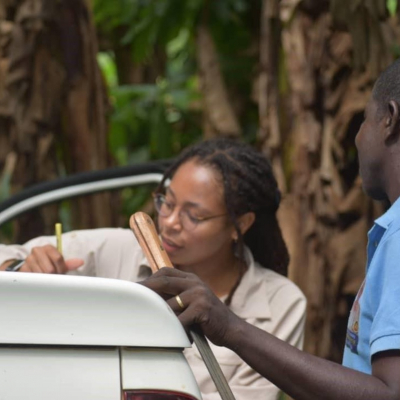
Shade trees hold diverse values to cocoa farmers in Ekiti State, Nigeria
New research by NBSI’s Zoë Brown in Agroforestry Systems found that cocoa farms in Ekiti State, Nigeria host a rich diversity of native and economically valuable trees. These trees offer multiple benefits, presenting a valuable opportunity for policymakers to implement certification frameworks that both safeguard and enhance the socioeconomic and conservation value of these agroforestry systems. -

New ‘World Court’ ruling opens the door for ambitious climate action
In a historic win for climate justice, the world’s highest court delivered an advisory opinion setting out States’ legal obligations in respect to climate change. From grassroots beginnings to the International Court of Justice, the ruling marks a pivotal moment in the global fight for climate action which centres human rights and justice for climate vulnerable nations. -

Nature and climate: welcome ambition, but policy contradictions threaten delivery
The UK government’s recent statement and new policy paper recognise that nature and climate are inseparable. This is a critical and overdue shift in policy framing. But this welcome vision risks being undermined by legislation that weakens nature protections and prioritises development at the expense of biodiversity.