
How can action on deforestation strengthen UK food resilience?
Introducing a new research project exploring the link between deforestation and UK food resilience. The UK government’s recent national security assessment highlights the risks of accelerating global ecosystem degradation for UK food security. In collaboration with DEFRA, the project brings together an interdisciplinary team to identify evidence-based policy solutions, funded by the Agile Initiative. June 4, 2026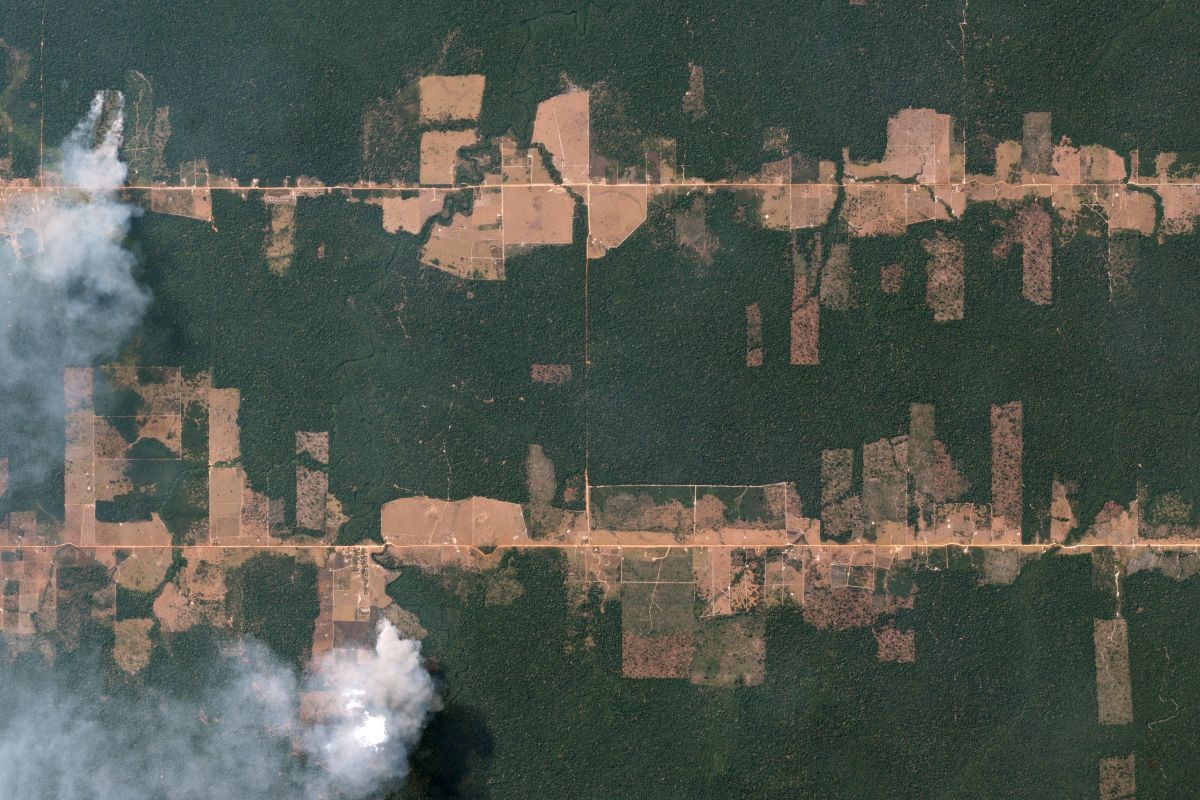
The UK government’s recent national security assessment underscores that accelerating global ecosystem degradation and collapse pose a serious threat to the UK food system, economic stability and international security. As climate change, biodiversity loss, and forest-risk commodity supply chains are increasingly intertwined, action on forest protection can no longer be treated as an environmental add-on, but as a core resilience strategy. Aligning deforestation-free trade and credible, science-based and equitable forest partnerships is essential not only to safeguard carbon-rich, biodiversity-critical forest ecosystems abroad, but also to strengthen global resilience while enhancing the capacity of countries like the UK to absorb shocks across their own food system. Despite increasing policy attention on forests as globally important ecosystems and progress in supply chain transparency, current analytical tools still do not adequately connect forest action in producer countries with measurable outcomes for UK food-system security and resilience.
The new research project, “How can action on deforestation strengthen the UK’s food system security and resilience,” explores the links between deforestation, supply chains and food system resilience by bringing together researchers and stakeholders to identify practical, evidence-based policy solutions, funded by the Agile Initiative. In collaboration with the Department for Environment, Food and Rural Affairs (DEFRA), this Research Sprint will explore how alternative deforestation-control pathways may affect agricultural output, trade patterns, livelihoods, and the UK’s food systems.
“Through this Sprint, we aim to synthesise emerging scientific evidence to assess how action on deforestation in producer countries influences potential cascading risks to the UK’s food‑system resilience.” – Aline Soterroni
Understanding how risks propagate through global value chains, and the conditions that determine the effectiveness of deforestation-control policies for mitigating those risks is particularly crucial now, at a time when deforestation and forest restoration have been recognised as critical to achieving multiple climate, nature, and social objectives.
“No discipline can provide an answer to our research questions on its own. So, we are experimenting with an interdisciplinary approach, combining different tools, methodologies and perspectives to start scratching the surface and uncovering the connections that matter, building the interdisciplinary evidence that policymakers need.” – Michael Ruggeri
We have an interdisciplinary team of researchers working on the project, whose expertise and contributions will support the project’s ongoing research, stakeholder engagement, and impact activities.
Meet the NbSI team working in this Agile Research Sprint:
Dr. Aline Soterroni

Aline is a Senior Research Fellow with the Nature-based Solutions Initiative (NbSI) and Oxford Net Zero (ONZ) at the University of Oxford. Her work focuses on scenario modelling to evaluate environmental and climate policies, with a particular emphasis on Brazil and the links between climate, nature, and forest-risk supply chains. Within the Agile Sprint, Aline is the project Principal Investigator and coordinates the different work streams and contributes to the trade analysis.
Michael Ruggeri
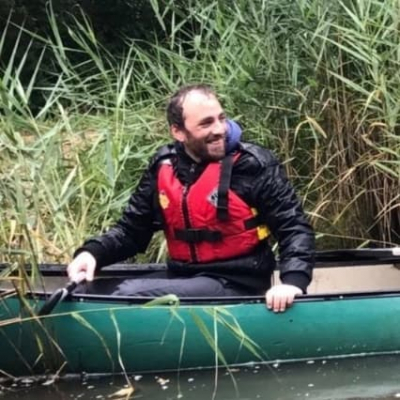
Michael is a researcher with the Nature-based Solutions Initiative. His current work focuses on agriculture–forest frontier landscapes, particularly cocoa and coffee, including participatory approaches to identifying strategies that can support livelihoods, ecosystems, and production. Within this project, Michael contributes to building the interdisciplinary evidence base on deforestation, food systems, and resilience.
Cláudia Coleoni

Cláudia is a DPhil (PhD) student in Geography and the Environment at the University of Oxford and a Research Assistant with the Oxford Martin School’s Agile Initiative. Her doctoral research examines transboundary water governance in the Amazon Basin, exploring how shared water systems are governed across political, territorial, and institutional boundaries, particularly in frontier and borderland contexts. Her current empirical focus is the Acre River Basin, a tri-border region shared by Bolivia, Brazil, and Peru. Within this Agile Sprint, Cláudia is leading the systematic review component and supporting the equity analysis in cocoa supply chains in Ghana.
Lubasi Limweta

Lubasi is a DPhil (PhD) researcher at the University of Oxford’s Nature-based Solutions Initiative (NbSI). His research focuses on agroforestry systems as nature-based solutions to address challenges of climate change, biodiversity loss, ecosystem functioning, and improving livelihoods. Lubasi has expertise in observational study designs, ecological data collection, evidence synthesis methods, alongside remote sensing and statistical analysis in R. Within this new research project, Lubasi works as a Research Assistant, leading the Meta-analysis component of the project and contributing to the systematic review.
Katie Hutchinson

Katie is an interdisciplinary ecologist whose work largely focuses on the links between biodiversity, community-led stewardship, and social-ecological resilience in tropical landscapes. With extensive field-based experience and collaboration with diverse stakeholders, her research combines ecological monitoring, and participatory approaches to understand how local knowledge and Nature-based Solutions contribute to livelihoods, climate adaptation, and sustainable land management. Within this Agile Sprint, Katie’s work centres on stakeholder collaboration, exploring relationships between deforestation and equity within cocoa supply chains in Ghana.
Yajju Pradhan

Yajju is an environmental researcher with an interdisciplinary research background at the intersection of socio-economic and ecological systems. Within the Agile research project, she is focusing on forest-risk commodities trade, particularly soy and cocoa from Brazil and Ghana, and their impacts on the agricultural outputs, trade flows, livelihoods, and the UK’s food system resilience.
For more information about the project, please visit the Agile Sprint page: How can action on deforestation strengthen the UK’s food system security and resilience?
Image credit: “Fishbone Deforestation, Rondônia, Brazil” by Planet Labs is licensed under CC BY-SA 4.0.
