
How to Save the Amazon
In honour of journalist Dom Philips and indigenista Bruno Pereira, a gathering of Indigenous leaders, human rights and environmental defenders, researchers and practitioners came together on Earth Day to celebrate their lives and build hope for 'How to Save the Amazon.' The new book uncovers drivers of deforestation and searches for solutions; it explores how we can fight ecological destruction and stand in solidarity with the frontline defenders of the Amazon. April 29, 2026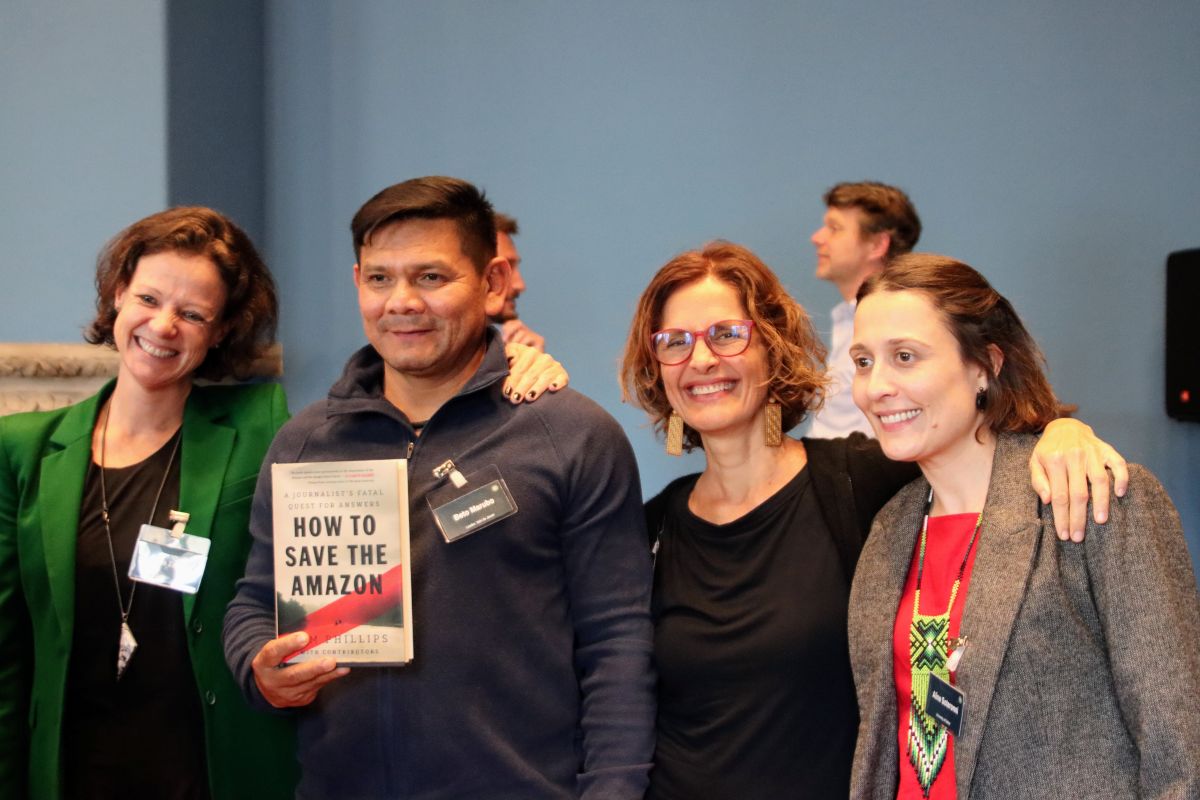
In honour of journalist Dom Philips and indigenista Bruno Pereira, a gathering of Indigenous leaders, human rights and environmental defenders, researchers and practitioners came together on Earth Day to celebrate their lives and build hope for ‘How to Save the Amazon.’
The book, How to Save the Amazon, uncovers the drivers of deforestation and searches for solutions; it explores how we can fight ecological destruction and stand in solidarity with the frontline defenders of the Amazon. The manuscript was completed by a group of journalists, experts and friends, after Dom and Bruno were tragically killed while researching the book.
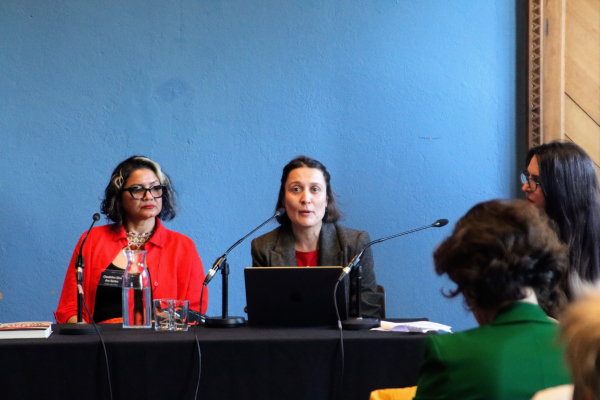
Claudelice Santos, human rights defender and environmental activist, and Aline Soterroni, NbSI/ONZ Research Fellow. Photo by Delaney Demaret
Dr Aline Soterroni joined a panel on corporate accountability and human rights – key themes from the book. Aline highlighted the importance of the Amazon Soy Moratorium – a landmark agreement for decoupling soy expansion from direct deforestation – and of how fragile voluntary agreements such as this can be in face of political shifts. She emphasised the role of science to help re-centre action and strengthen policy, pointing to her previous findings showing that expanding the Soy Moratorium to the Cerrado biome is feasible.
The day was filled with stories, science, and people who care deeply for the Amazon and the people who dedicate themselves to protecting it.
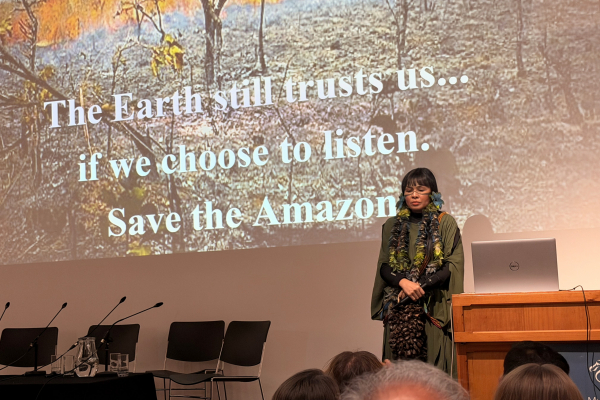
Adana Omágua Kambeba – Indigenous doctor and shaman-in-training – brought the day to a close with a powerful song. Photo by Yadvinder Malhi
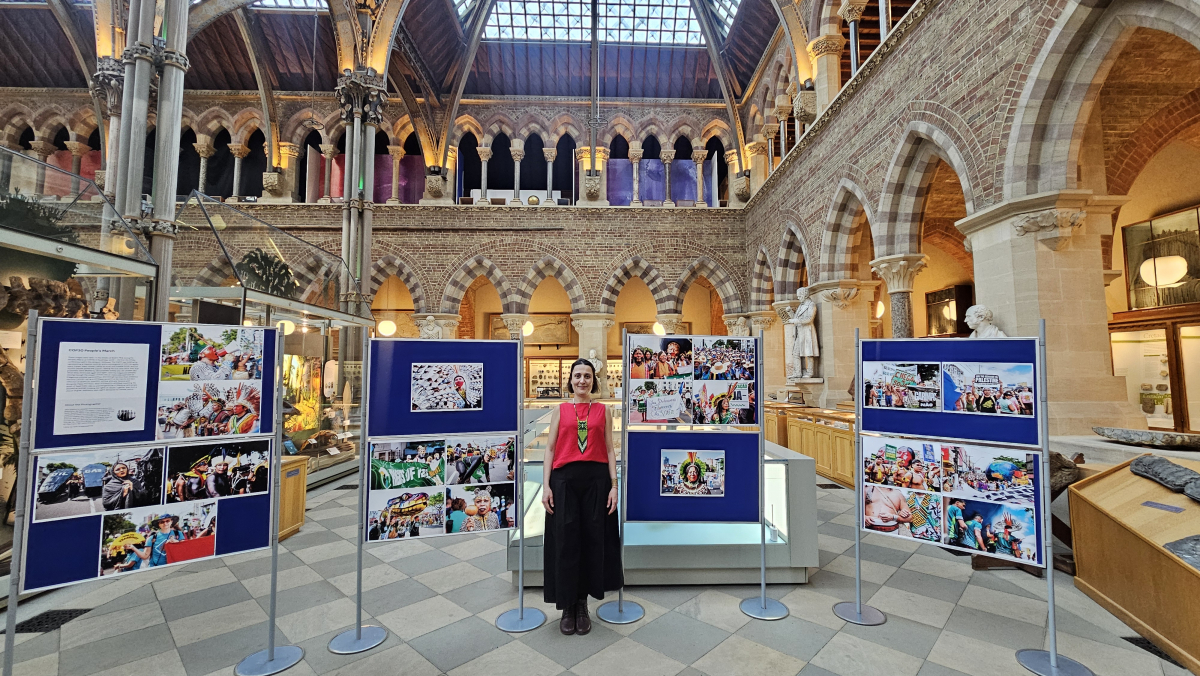
The evening featured an exhibition of Aline’s photos from the Peoples’ March at COP30, Belém. Photo by Carlyn Samuel
Deepest thanks to all the contributors and organisers of the day, including Instituto Dom Phillips, Leverhulme Centre for Nature Recovery, Environmental Change Institute, Ithaka, Oxford University Museum of Natural History and Global Canopy.
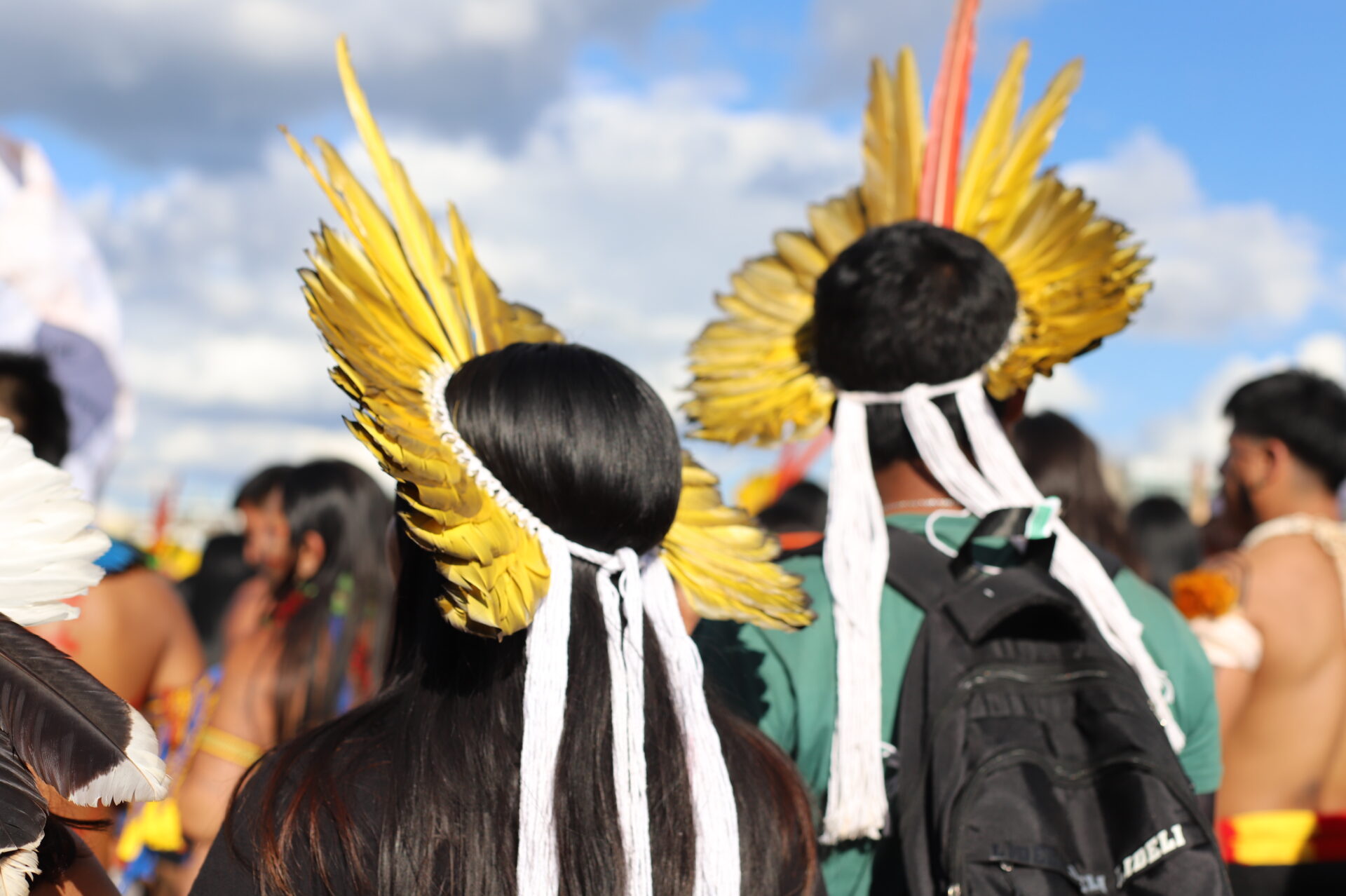
Read more about the COP30 Peoples’ March here.
Read more about why the Soy Moratorium is critical for protecting the Amazon here.