
A pathway towards equitable co-design with smallholder farmers
New research by the Flourishing Landscapes Programme offers a pathway towards more equitable collaboration between researchers, practitioners and smallholder farmers. The study presents a practical framework for embedding equity within co-design, moving from top-down knowledge transfer to knowledge co-production. August 18, 2026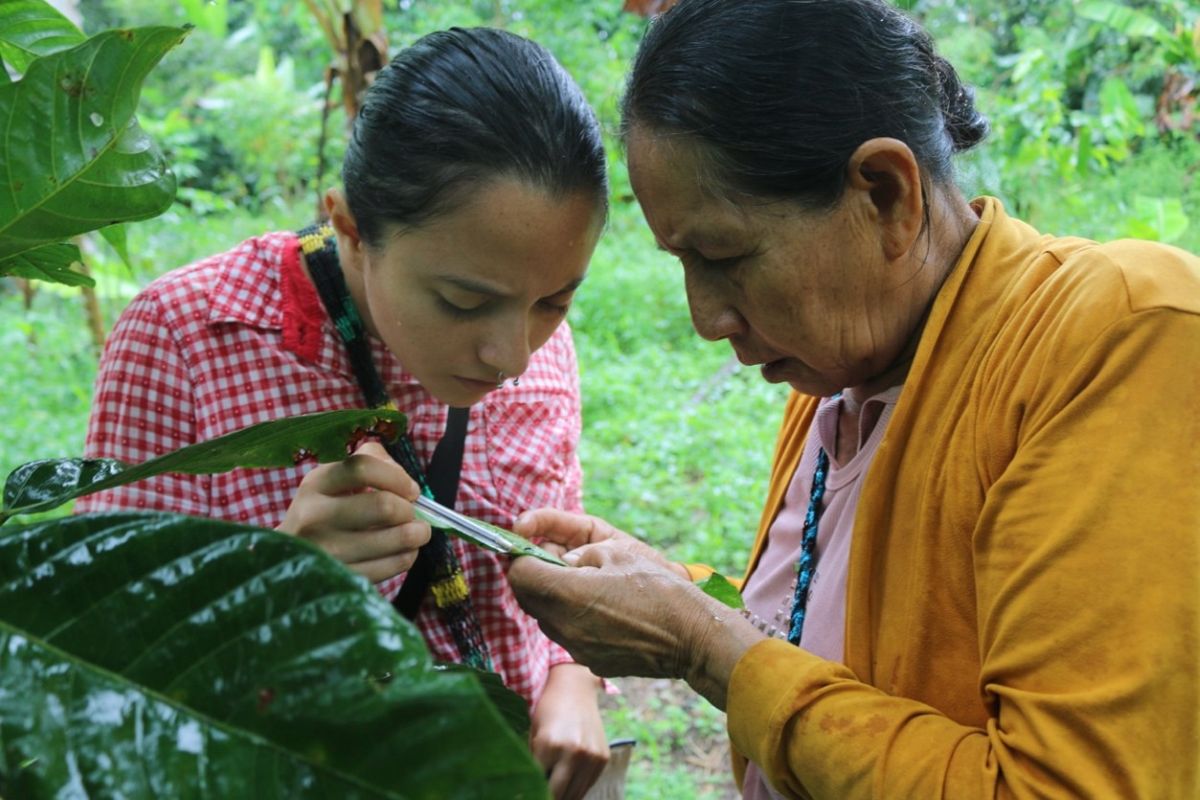
Food system transformation is central to addressing the interconnected crises of climate change, biodiversity loss and land degradation. However, agricultural innovations are dominated by top-down approaches, which privilege Western scientific paradigms over local knowledge, often failing to respond to place-specific challenges within farming landscapes. While the need for more inclusive and equitable innovation processes is widely recognised, practical clarity is lacking.
Moving from top-down knowledge transfer to knowledge co-production requires collaborative approaches that actively challenge knowledge and power hierarchies. Procedural equity is crucial to this, understood in this study as ‘the degree to which co-design processes ensure inclusive, fair, and meaningful participation in decision-making, particularly for historically marginalised or underrepresented groups.’
In practice: embedding equity through co-design
Focusing on smallholder Kichwa-managed cocoa agroforestry systems (chakra) in Napo, Ecuador, the new study identifies key equity processes which can enable legitimate and relevant nature-based solutions.
The authors identify five core principles crucial to procedural equity and quality in co-design and inclusive innovation processes:
- Transparency – to rebuild trust.
- Fairness and inclusivity – to address structural and procedural barriers that have historically excluded different knowledge systems from agricultural innovation.
- Empowerment – which extends beyond inclusion to address historical limitations to the agency of farmers.
- Co-ownership and shared responsibility – to challenge the conventional approach to innovation where solutions are transferred top-down to implementers, rather than co-designed.
- Reflexivity – to sustain procedural equity by embedding mechanisms for critical self-assessment and adaptive learning in co-design.
Co-author Sasi Cerda emphasises the importance of building trust in the co-design process:
“As an Indigenous leader, I consider the initial phase of community engagement and socialization to be fundamental. Before research begins, it is important to present the project to the community, explain its objectives and methodology, and create spaces for dialogue with community leaders and local organizations. This process helps build trust and establishes the foundations for meaningful participation. I also believe that the knowledge generated through research should remain within the community, contributing to local empowerment and ensuring that its benefits continue beyond the duration of the project. For me, research should not only generate knowledge but also strengthen communities and their capacity to shape their own futures.”
The study also presents the practical application of these principles as a co-design framework, conceptualised with Kichwa farmers as co-designers of innovation alongside researchers and other agricultural stakeholders:
- Phase 1 – planning: identification of key issues and initial research conceptualisation
- Phase 2 – preparatory phase: building the foundations for horizontal knowledge flows
- Phase 3 – ideation and design: from technology transfer to farmer-centred innovation
- Phase 4 – deployment: from adoption to co-evolution of co-designed solutions
Explore the full framework here.
In the transition from top-down solutions to co-production, the role of agricultural advisors and researchers is redefined as knowledge exchange facilitators in the co-design process.
Co-author María Gabriela Zurita Benavides offers further reflections on the role of research and researchers:
“As an Ecuadorian researcher, this work led me to question how research is designed and whether it can truly improve farmers’ lives. While I was trained within Western science, my commitment as an ethnoecologist is to support meaningful change alongside communities. Reflecting on what genuine participatory research means has challenged both my academic formation and the enduring colonial legacies that shape knowledge production. I see this paper as a first step in inviting researchers and development practitioners to critically reflect on our daily practices and on the deeper purpose of the science we do.”
Critically, the analysis reveals that embedding procedural equity from the outset and throughout all phases of co-design is critical for driving transformation in agricultural contexts.
“Equitable co-design has important implications for nature-based solutions. NbS are more likely endure and bring social and ecological benefits when they are collectively defined, owned and managed.” – Michael Ruggeri, NbSI
Examples of the co-research process by Kichwa farmers and external researchers: insect sampling in chakra (agroforestry) systems (Photo credit: Óscar Luna)
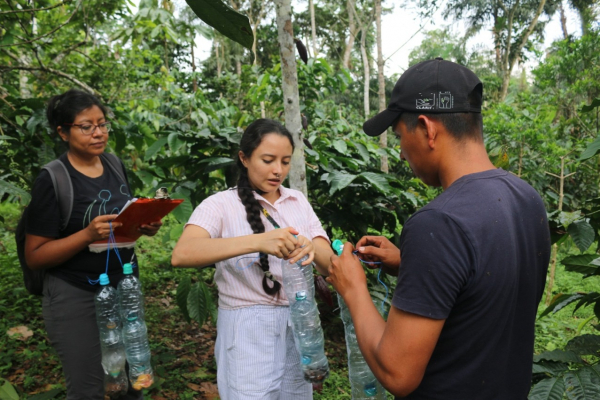
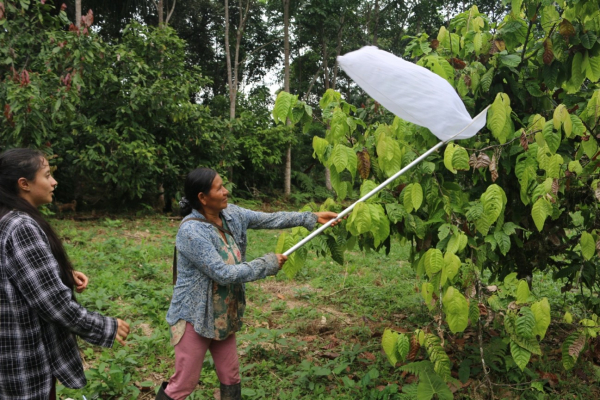
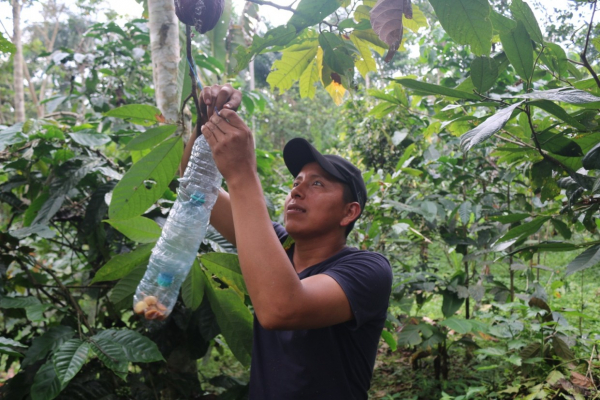
Read the full study: Evaluating strategies for equitable co-design of sustainability interventions with smallholder farmers
Read more about the Flourishing Landscapes Programme here.
The Flourishing Landscapes Programme (FLP), led by NbSI’s Dr Will Thompson, is one of thirteen recipients of the first round of research grants awarded by the Global Centre on Biodiversity for Climate (GCBC) – a UK Official Development Assistance (ODA) research and development programme that funds research to unlock the potential of nature to provide climate solutions and improve livelihoods. It is funded by the UK’s Department for Environment, Food and Rural Affairs working in partnership with DAI Global as the Fund Manager Lead and the Royal Botanic Gardens, Kew as the Strategic Science Lead. Learn more about GCBC and this grant.
Work in Ecuador is conducted in partnership with Ikiam and WWF Ecuador.