
Why MPs want the public told the truth about climate and nature
NbSI Director Professor Nathalie Seddon reflects on the Westminster Hall debate on Monday 16 November, when more than 75 MPs considered a petition calling for a televised national briefing on climate and nature risks, and on why the science needs to reach the wider public. November 17, 2026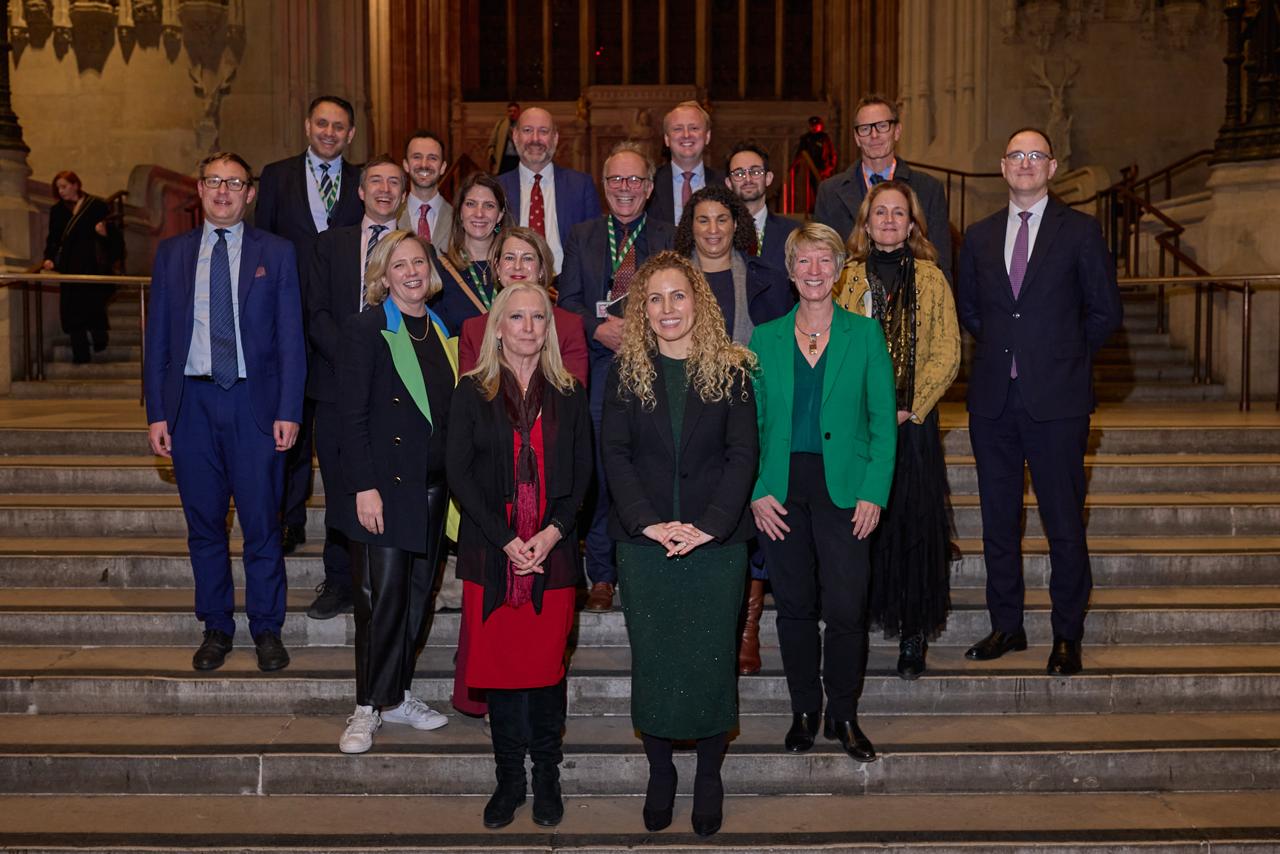
Last night I felt as though I was witnessing history. I sat on the edge of my seat in a packed Westminster Hall, with goose bumps, as MP after MP stood up to argue that the British public deserves to be told the truth about the climate and nature crisis, and what we can do about it. It was a heady mix of relief, emotion and hope. I found it extraordinarily humbling. I came away re-energised, and feeling very positive about my own country.
The debate was on a petition, started by Chris Packham and signed by more than 138,000 people, calling on the government to hold a UK-wide briefing on climate and nature risks [1]. The idea, championed by the National Emergency Briefing (NEB), is simple. The Prime Minister would introduce a live briefing on prime-time television in which independent experts lay out the evidence, as they did during covid, together with what we can all do about it [2]. Dr Roz Savage, MP for South Cotswolds, opened the debate, and Katie White, Minister for Climate Transition, responded for the government [3].
It was standing room only. Andrew George, MP for St Ives, counted at least 75 MPs and thought it perhaps the best-attended Westminster Hall debate he had spoken in. The Minister said she had never seen one as full. What struck me first was the incredible diversity of MPs, from every corner of the country and across the parties, representing the views of their constituents. Yet there was an incredible unity of message. They backed each other up, adding strength or important place-based nuance to each other’s impassioned statements. The speeches were articulate, passionate and scientifically accurate. It really felt as though the evidence has cut through, despite all the misinformation, with the climate extremes of recent years bringing things home to so many people.
Several themes ran through the evening
The first was urgency. The impacts of climate change and nature loss are with us now. They are not some future possibility. This summer was the UK’s hottest on record [4], and England has just had its worst cereal and oilseed harvest since records began in 1984 [5]. MPs spoke of people who can’t insure their homes, of food insecurity, and of high fuel prices because of our dependency on fossil fuels. Many made the point that if thousands of people had died in a pandemic or from some other cause, it would be treated as a national emergency. UKHSA estimates that nearly 3,000 people died from heat in England during the May and June heatwaves alone [6]. As Roz Savage put it, “If a hostile power had caused the number of deaths attributed to this summer’s heatwaves, we would surely regard it as a national emergency.” Pippa Heylings (South Cambridgeshire) pointed out that if these had been covid deaths, we would expect the government to hold a briefing: “Why is it different for the nature and climate emergencies?” Many also framed the crisis as a matter of national security, citing the government’s own assessment, produced with the Joint Intelligence Committee, that global ecosystem degradation and collapse threaten UK security and prosperity, not least through the food we import [7]. As Linsey Farnsworth (Amber Valley) reminded the Hall, “the safety of our country and our citizens is the first duty of Government.” Through Oxford’s Agile Initiative and the Oxford Martin School, we have been working with policymakers from 15 government departments, statutory bodies and military services to trace the pathways by which environmental change and biodiversity loss threaten UK national security, from food, water and energy to shipping and societal resilience. The resulting research agenda was published in September [11].
“the safety of our country and our citizens is the first duty of Government.”
Linsey Farnsworth (Amber Valley)
The second was that we face a climate and nature crisis. Many speeches centred the natural world and our dependency on it: for protection against floods and heatwaves, and for food and water security. MPs recognised that the destruction of the living world is as much a part of the problem, and that the two crises amplify each other. As Adrian Ramsay (Waveney Valley) put it, “Nature is not a luxury we can strip away in the name of growth. It is intrinsic to our life support systems, our national resilience and our security.” Sarah Dyke (Glastonbury and Somerton) was more succinct: “there is no food security without nature security.”
The third was that this is not a choice between the economy and the environment. A stable economy needs a stable climate and a thriving natural world. One dissenting voice early on highlighted the cost of net zero without mentioning any of the economic benefits. But those billions aren’t going up in smoke. They are being invested in clean local energy, green infrastructure, solar on roofs, nature in our cities, restored land and nature-positive farming, which create jobs, boost incomes and improve health through cleaner air, cleaner water and better mental health. My colleagues at the Oxford Smith School have shown that adopting net zero technology like solar and wind energy will save the UK billions in the long run. Plus, delay has costs of its own, and we should not expect our kids to foot the bill for a mess they didn’t make. We can’t afford to delay. As Connor Naismith (Crewe and Nantwich) observed, “there will simply be no economy on a planet that continues to get hotter and hotter every year.”
“scientific facts are increasingly being weaponised or dismissed as part of political discourse.”
Danny Chambers (Winchester)
Fourth, many MPs highlighted the serious problem of misinformation and active disinformation online, which confuses people and erodes trust. Danny Chambers (Winchester) warned that “scientific facts are increasingly being weaponised or dismissed as part of political discourse.” Their answer was to trust the public, and to respect people enough to give them the science. Joe Morris (Hexham) put it perfectly: “When a doctor has bad news, they do not hide the scan; they sit down, look the patient in the eye, explain it and say what will happen next.” That is what we need. It is an insult to all the brilliant, creative, caring and innovative people of this country not to tell them the facts, and not to show them the many things they can do. As Pippa Heylings said of the screenings she had attended, “people do not panic when they hear the truth. They want to be better prepared.” Brian Mathew (Melksham and Devizes) was blunter: “My constituents are ready to face the truth. It is time the Government matched their courage.”
Fifth, MPs listed the many places in their constituencies where the People’s Emergency Briefing film has been screened. Joe Morris described the moment the lights come up: “Nobody cheers and somebody asks the question that has brought us all here: why has nobody told us?” Several cited the University of Bath evaluation of the screenings, which draws on thousands of before-and-after audience responses [8]. They also recognised that screenings only go so far. The Bath team found that they largely attract people who are already highly concerned [8], although they are valuable for bringing communities together. A national briefing on prime-time TV would reach a far broader audience. Several argued that we need much more besides: a sustained, comprehensive public engagement campaign across all forms of media that is inclusive and multi-generational, and, as Vikki Slade (Mid Dorset and North Poole) proposed on behalf of her constituent Amanda, a national day of action. Martin Rhodes (Glasgow North) argued that success should be measured “by whether we create a sustained national conversation that reaches all sections of society.”
Finally, and above all, there was community: its courage, creativity and care. In Roz Savage’s words, “Our country has extraordinary reserves of courage, ingenuity, generosity and collective wisdom.” MPs described inspiring local initiatives across the country, the importance of supporting farmers and of bringing everyone into the tent, and what people can achieve when they share a purpose. As Pippa Heylings put it, “Concern and hope are contagious, and when the Government do not act, people do.” This is a huge problem, but it is one we can address, together. Roz Savage ended her opening speech on “the active hope that comes from knowing that we still have choices”, an idea developed by the late ecophilosopher Joanna Macy with Chris Johnstone. Active hope is something we practise: being clear about what we hope for, and then playing our part in bringing it about, whatever the odds [10]. Alistair Strathern (Hitchin) dismissed the idea that we will “somehow get the rest of the world to go faster by going slower ourselves”: “I cannot think of a madder line of argument.” Several welcomed the Prime Minister’s presence at COP31 in Antalya, where he was the only G7 leader to attend [9].
I came away with renewed hope that this country has the capacity, courage, creativity and community to help lead the world out of the polycrisis. Having played a major role in getting us into it in the first place, that only seems fair.
Petition debates do not end in a vote [3]. The Minister paid warm tribute to the campaign, observing that “A film has become a movement.” She did not commit to a televised briefing, but she agreed “that we must be honest with people about the risks” and announced that she and her DEFRA counterparts will meet the NEB leadership next week.
What matters now is whether the government acts on what it heard
It has been a real privilege to be part of the NEB over the past year, as one of the experts who presented at the first briefing in Central Hall Westminster in November 2025 and in the work that has followed [add specifics]. It was lovely to be mentioned by name at the end of the debate, when the Minister paid tribute to some of the experts involved, alongside Hayley Fowler, Angela Francis and Lieutenant General Richard Nugee. It has convinced me how much it matters that the scientific evidence reaches the wider public clearly and accurately, together with the many things people can do, and are in fact getting on with, in response. Agency matters as much as information. Faced with the scale of what is happening, many people feel overwhelmed and stuck, in what I have come to think of as a crisis of paralysis. What breaks that paralysis is leadership that levels with people about how grave things are, and in the same breath calls on their courage, resourcefulness and sense of common purpose, trusting them to rise to it.Last night suggested that Parliament is ready to hear it. I believe the wider public is too.
If you are interested in any of this, and curious about some of the amazing people representing you in government, please find time to watch the debate [3].
References
- 1 UK Parliament Petitions. Hold a UK-wide briefing on climate and nature risks (e-petition 767687).
- 2 National Emergency Briefing
- 3 UK Parliament. E-petition debate relating to a UK-wide briefing on climate & nature risks, Westminster Hall, 16 November 2026.
- 4 Met Office (2026). Summer 2026 provisionally hottest on record for the UK.
- 5 Defra (2026). Provisional cereal and oilseed production estimates for England 2026.
- 6 UKHSA (2026). Interim heat mortality monitoring report, England: May and June 2026.
- 7 HM Government (2026). Global biodiversity loss, ecosystem collapse and national security.
- 8 Clarke, R., Wilson, M., Kotecha, M., & Whitmarsh, L. (2026). CAST briefing 48. How the People’s Emergency Briefing turns environmental concern into civic action. Centre for Climate Change and Social Transformations (CAST).
- 9 Prime Minister’s Office (2026). PM speech at COP31 climate summit, 12 November 2026.
- 10 Macy, J. and Johnstone, C. (2012; revised edition 2022). Active Hope: How to Face the Mess We’re In Without Going Crazy. New World Library.
- Agile Initiative (2026). Environment and National Security: Exploring the Risk Pathways. Forward-Looking Research Agenda. University of Oxford. https://www.agile-initiative.ox.ac.uk/wp-content/uploads/2026/09/FLRA_2026.pdf