
NbS Foundation Course kicks off: Meet the Scholars
We are delighted to welcome the newest cohort to the NbS Foundation Course and congratulate the scholars who have been selected for several highly competitive full and partial scholarships! Over the following weeks participants will explore the interdisciplinary landscape of NbS, from their role in climate mitigation and adaptation, to economics and sustainable development, and how they can be embedded in policy, finance and business. May 6, 2026
We are delighted to welcome the newest cohort to the NbS Foundation Course and congratulate the scholars who have been selected for several highly competitive full and partial scholarships!
The course kicked off with an introduction to the science behind Nature-based Solutions from NbSI Director Professor Nathalie Seddon, and their role in climate mitigation and adaptation by Senior Researchers Aline Soterroni, Alison Smith and Will Thompson. Over the following weeks, participants will explore the interdisciplinary landscape of NbS, from economics to sustainable development to policy, finance and business.
Here the scholarship winners introduce themselves and share what motivated them to apply for the NbS to Global Challenges Foundation Course.
Erezana Qarkaxhija Vela

Erezana Qarkaxhija Vela is a Water Engineer with an MSc in Forest, Water and Landscape Management. With over a decade of experience across the private sector and development organizations, she works at the intersection of climate-resilient infrastructure, urban resilience, and disaster risk. She currently supports institutions in Kosovo integrating nature-based solutions into planning, infrastructure, and policy. She is particularly interested in bridging science and practice and turning evidence into implementation.
She joined the NbS Foundation Course to deepen her understanding of the science behind nature-based solutions and strengthen her ability to translate that knowledge into practical action. In her work, she sees NbS as a necessary shift in how we plan, design, and manage infrastructure and natural resources in response to climate change. Their real strength lies in their ability to address multiple interconnected challenges at once, from water management and biodiversity loss to urban resilience and long-term sustainability. Concurrently, their application still requires stronger evidence, clearer methodologies, and greater confidence in implementation. She is most looking forward to gaining knowledge that will help her apply NbS more credibly and effectively in practice, and use it to support tangible, on-the-ground contributions across different contexts.
Giorgi Orkodashvili

Giorgi Orkodashvili is an environmental policy specialist with extensive experience in environmental and economic growth programs across the South Caucasus region. He has managed multi-million USD development initiatives focusing on economic growth, environmental policy, and sustainable development, and has worked with organizations such as CENN, FAO, USAID, and GCF. His academic and professional interests include economic development, environmental economics, institutional development, and policies that promote sustainable growth in developing countries.
He was particularly motivated to join the NbS Foundation Course because he believes that Nature-based Solutions can play a critical role in helping developing countries transition toward sustainable growth pathways, and he is looking forward to learning from global expertise and exploring how to apply these approaches in Georgia.
Abhipsha Ghosh

Abhipsha Ghosh has an academic background in environmental studies, and since 2019, and has worked with diverse stakeholders in navigating complexities of wildlife conservation, climate policy, project planning and implementation. In her role at WRI India, she contributes to projects on urban climate resilience and support monitoring, evaluation and learning (MEL) processes.
Through the NbS Foundation Course, she seeks to enhance her understanding of high-integrity NbS across different sectors along with nuances of design, finance, implementation and governance practices from global case studies. She looks forward to learning from thematic experts, engaging in insightful discussions with peers, as well as applying course insights to create real-world impact.
Juan Diego

Juan Diego is a Peruvian biologist with ten years of experience designing and implementing community-based conservation projects in the peri-urban ecosystem of “lomas” in the capital of Peru as the Director of the NGO Peruvian Centre for Urban Socioecosystems Resilience. Additionally, he’s been working as a researcher and technical assistant with research and development organizations such as ICRAF, CIFOR, Bioversity International, Helvetas Swiss Cooperation, and the Science Panel for the Amazon. Juan Diego holds an MSc in Social-Ecological Resilience for Sustainable Development at Stockholm University and a postgraduate diploma in Environmental Management from the Technische Universität Dresden.
His motivation to apply for this course is to strengthen his knowledge and skills to continue promoting resilient cities in Peru and learn from NbS experiences of his peers, practitioners, and researchers.
Noraziah Abdul Wahab
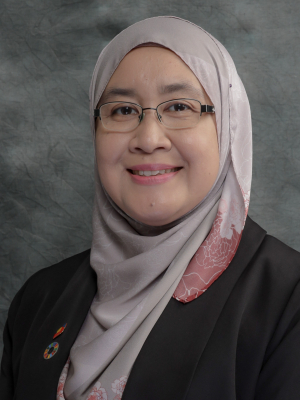
Associate Professor Ts. Noraziah Abdul Wahab is an accomplished academic, sustainability leader, and engineer with over 25 years of experience spanning industry, higher education, sustainability governance, and community development. She currently serves at the Faculty of Engineering, Universiti Malaysia Sarawak (UNIMAS), and holds the leadership role of Assistant Vice-Chancellor (Industry–Community Network and Sustainability). Her work focuses on advancing sustainability governance, water security and safety, nature-based solutions, and community-based participatory research (CBPR), with a strong emphasis on translating research into impactful solutions for rural and indigenous communities.
She joined the NbS Foundation Course to facilitate knowledge transfer to a biodiversity-rich yet climate-vulnerable region in the Global South, where nature-based solutions hold immense potential but remain under-implemented. The knowledge gained will be applied in her work on sustainable water security and community resilience, and integrated into teaching, research, and community development programs, benefiting her institution and local communities.
Syeda Javaria
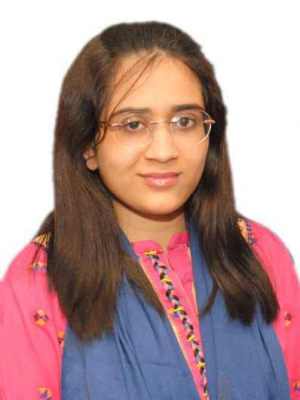
Syeda Javaria is a Municipal Officer in the Sindh Local Government and currently serves as an Assistant Director in the Karachi Metropolitan Corporation. With her academic background in Human Resources and her professional expertise in urban development, she leads climate-focused initiatives in Karachi. She coordinates and implements the Karachi Climate Action Plan and other strategies for sustainable urban planning. She is dedicated to integrating Nature-Based Solutions to combat extreme heat, sea level rise and urban flooding.
She joined the NBS Foundation Course to gain technical knowledge for promoting nature-based resilient urban development of Karachi.
Shadrack Mutembei
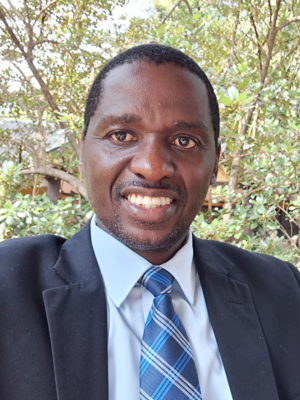
Shadrack Mutembei is the Executive Director of Communities EverGreening Africa, a Kenya-based non-profit organization pioneering youth empowerment, landscape restoration, and sustainable livelihoods. A senior leader in development and conservation with over 20 years of experience across Eastern and Southern Africa, Shadrack has served as Country Director for The Green Belt Movement, Habitat for Humanity, and Help Lesotho. He has extensive experience designing and implementing community-based solutions to local and national challenges. His work bridges environmental restoration and socio-economic resilience, including large-scale tree-growing initiatives that have restored forests and landscapes while empowering thousands of farmers and youth. He leads initiatives to transform school grounds into vibrant outdoor learning environments and serves on the Leadership Council of the International School Grounds Alliance. Shadrack holds a Master of Arts in Organizational Leadership from Eastern University, USA, and a Bachelor of Arts from the University of Nairobi, Kenya.
He joined the NbS course to bridge the gap between grassroots restoration and global policy. Mastering Oxford’s scientific and governance frameworks will equip him with the ability to transform community-led restoration successes into evidence-based, bankable strategies and enable the scaling of these models across the country and beyond for lasting climate resilience.
We look forward to many interesting discussions and shared learnings over the next six weeks!
If you are interested in joining the next NbS Foundation Course or applying for a scholarship, find out more here.