
Experts call for better assessment of climate and nature risks
In a new Comment published in Nature Climate Change, experts across climate, nature, health, national security, and financial risk call for government to reconcile how climate and nature risks are assessed. They warn that current approaches can produce conflicting advice on the severity of risks, making it difficult for policymakers to decide how to act and spend. October 7, 2026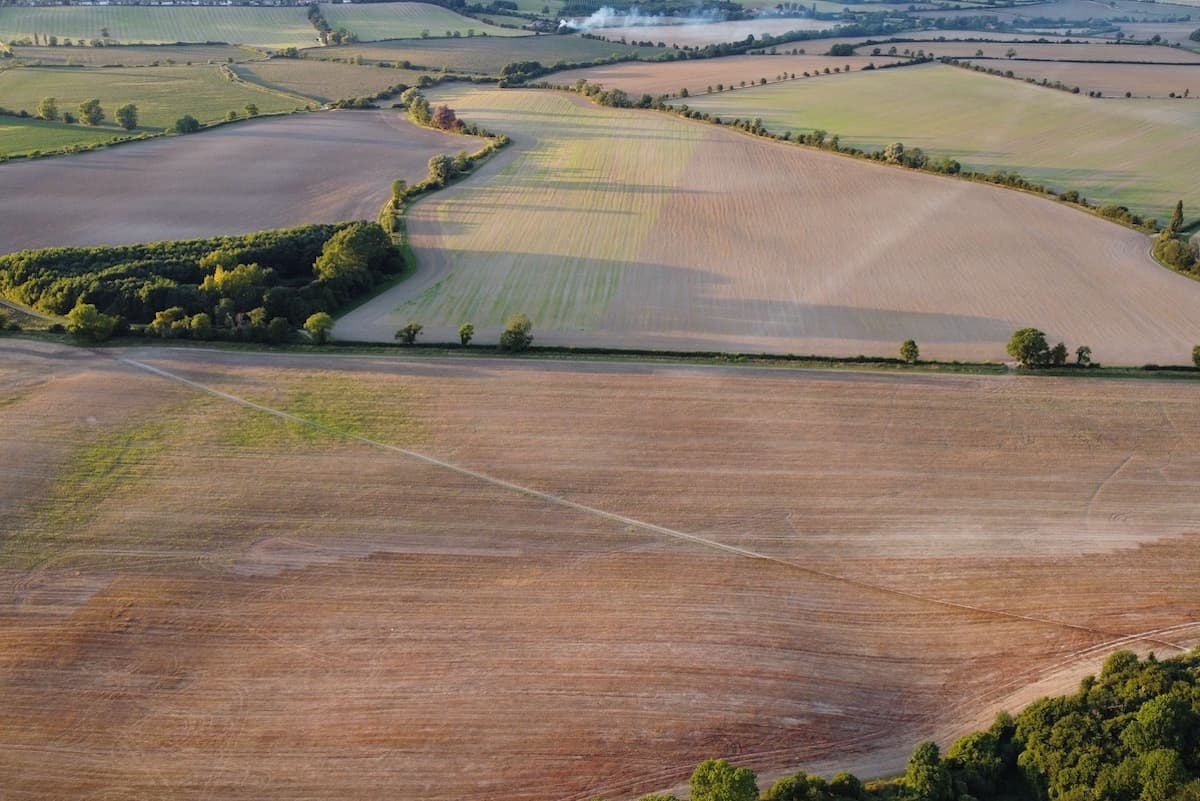
Professor Nathalie Seddon joins colleagues across climate, nature, health, national security, and financial risk in a new Comment published in Nature Climate Change. The authors warn that current assessments of climate and nature risks can produce conflicting advice, giving policymakers very different pictures of the severity of the risks ahead, and making it harder to judge how seriously to act and how much to spend.
This Comment comes after a summer that was, provisionally, the UK’s hottest on record, ending with almost three-quarters of England in drought. 2026 saw the driest July in England since at least 1836, with only 10% of average rainfall. This led to over 1,100 wildfires and a reduced harvest of staple crops such as winter wheat, oat, and spring barley.
The urgency of preparing for climate and nature risks in the UK is evident. However, the experts highlight that current assessment approaches need to be reconciled to support decision-making.
Governments assess climate and nature risk through two approaches which were developed for different purposes, and which often reach different conclusions:
National security assessments consider reasonable-worst-case scenarios.
- From this perspective, climate and ecological change emerge as near-term, high-confidence threats to food, economic and national security. The UK National Security Assessment published in January 2026 concluded with high confidence that global ecosystem degradation and collapse threaten UK security and prosperity. It warned that the world is already experiencing crop failures, intensified natural disasters, and infectious disease outbreaks, and that “every critical ecosystem is on a pathway to collapse”.
Economic modelling typically focuses on central estimates and cost-benefit calculations.
- The Office for Budget Responsibility (OBR), which advises Parliament on fiscal sustainability, bases its climate damage estimates on central scenarios rather than reasonable worst cases and can imply that economic consequences are more manageable. In 2024, the OBR estimated that climate damage would leave UK GDP around 5% lower in a scenario where global temperatures rise to just under 3°C by the 2100. Its July 2025 assessment increased that to around 8%, while acknowledging that some potentially severe risks remain difficult to quantify.
Both approaches inform decisions on fiscal risk, public spending, adaptation, food and security, yet governments generally have no common framework for reconciling them.
Towards reconciled assessment of climate and nature risk
The authors propose three shifts to help integrate security and economics assessments:
- Present expert judgement alongside model best-estimates, to help decision-makers account for serious risks that are difficult to quantify.
- Separate no-regret measures from actions involving trade-offs and from high-stakes, irreversible commitments, and hold each to a different standard of evidence. For example, no-regret measures such as energy efficiency, building retrofit, ecosystem restoration and plant-rich diets are justified across almost any plausible future, because they cut emissions while reducing exposure to price and supply shocks and deliver near-term health and resilience gains.
- Bring climate, nature, fiscal, health, food-system and security risks into a shared framework, rather than separate approaches, so risks identified in one area are not overlooked elsewhere.
Lead author Prof Paul Behrens (Oxford Martin School) explains the importance of integrating approaches to risk assessment:
“Climate risks don’t happen in isolation. This summer’s extreme heat and drought affected farms and food production, put pressure on water supplies and ecosystems, and had consequences for people’s health. Those impacts can ripple out into food prices, infrastructure and the wider economy. Looking at each risk separately can seriously underestimate the overall impact. We need a combined approach where the outputs of risk-assessments and economic modelling can complement one another in a period of increasing crises.”
Under-preparing costs more than over-preparing
Where potential damage is severe and irreversible, being under-prepared can cost far more than preparing for events that turn out to be less damaging. The paper also identifies “no-regret” actions that are worth taking even if the worst-case scenario never happens.
For example, Prof Nathalie Seddon, Founding Director of NbSI, outlines how actions to restore nature (nature-based solutions) can help protect people from climate extremes:
“This summer showed how closely the condition of our rivers, soils and ecosystems is tied to food, water and people’s health. Restoring nature is therefore part of preparing for climate risk. Reconnecting rivers to their floodplains, rewetting peatlands and restoring wetlands can slow and store water, reducing flood peaks downstream while helping landscapes hold water through drought and giving wildlife room to recover. These measures can strengthen the resilience of the interconnected social and ecological systems on which we all depend, across a wide range of possible futures.”
Governments already plan for some severe risks this way. UK pandemic planning has been built around reasonable-worst-case scenarios.
For climate and nature, the experts say governments should not have to wait for an equivalent shock to find out they were under-prepared.
Read the full Comment in Nature Climate Change: Governments must reconcile dissonant climate assessment approaches
Several of the authors gave expert briefings for the National Emergency Briefing and People’s Emergency Briefing film. Read more here.